
|
Lot: 133 ♡
|
|||||||||||
|
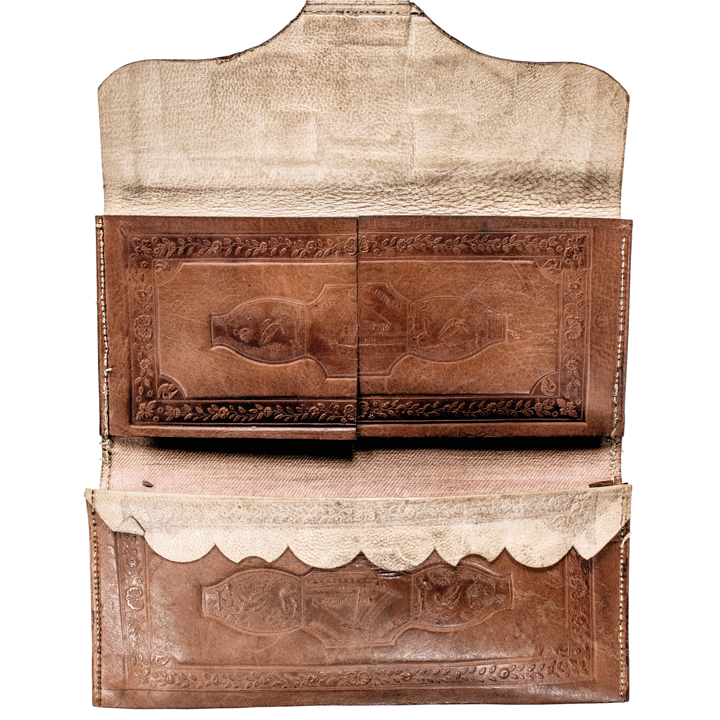
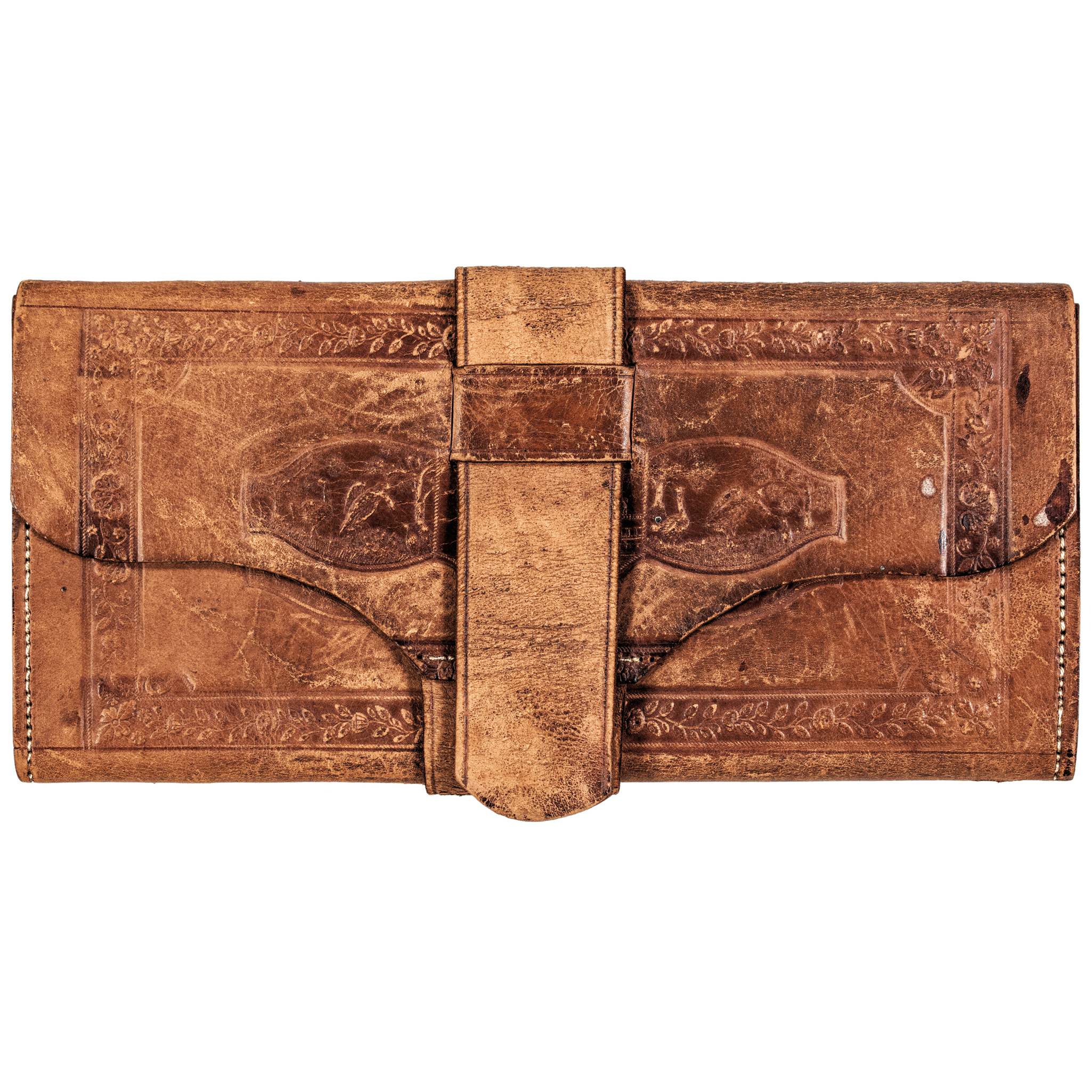
Early American Commemorative Sloop “Liberty” Affair Wallet Embossed 5 times with John Hancock's Sloop Liberty
|
|||||||||||
|
|||||||||||
 |
|
||||||||||
|
Lot 133:
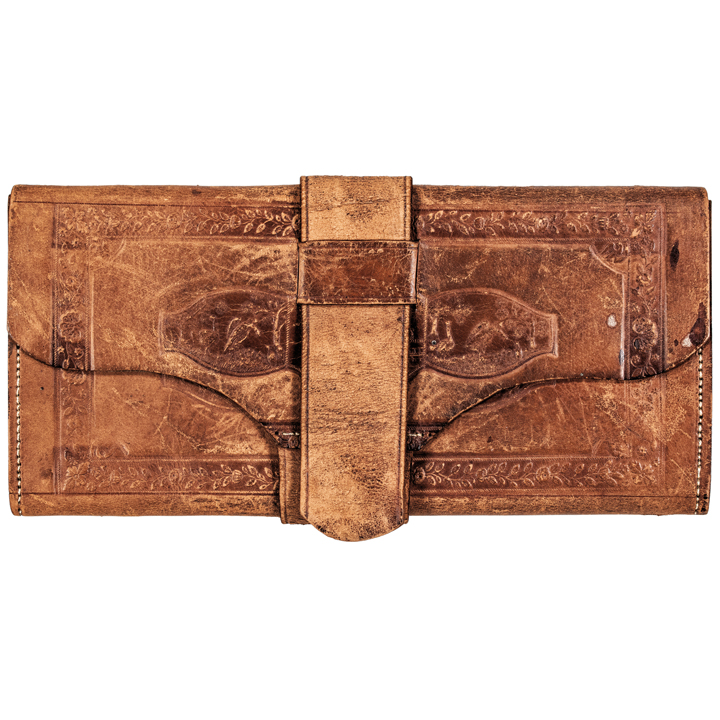
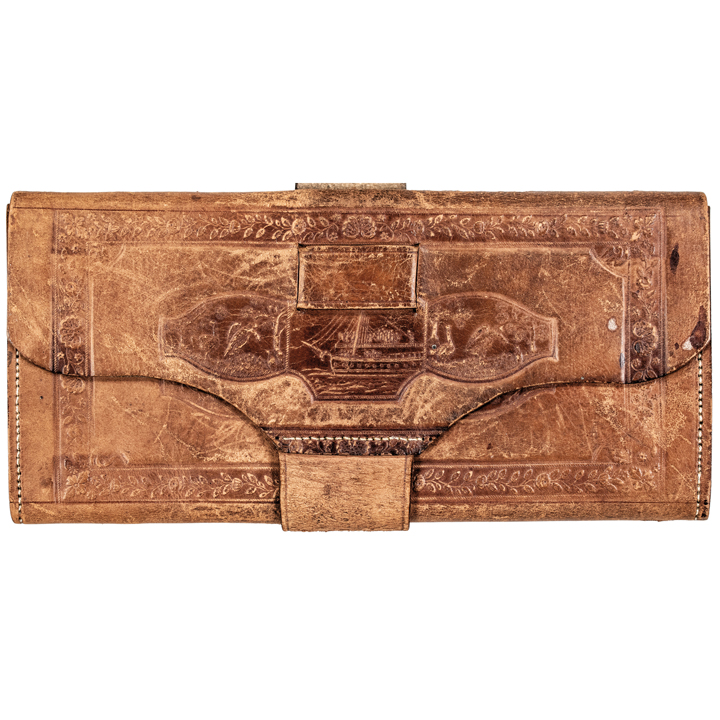
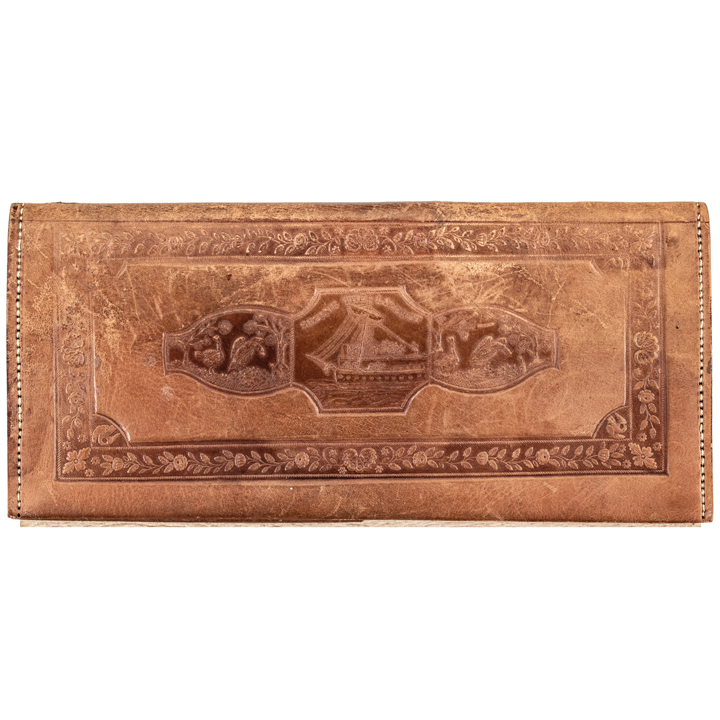
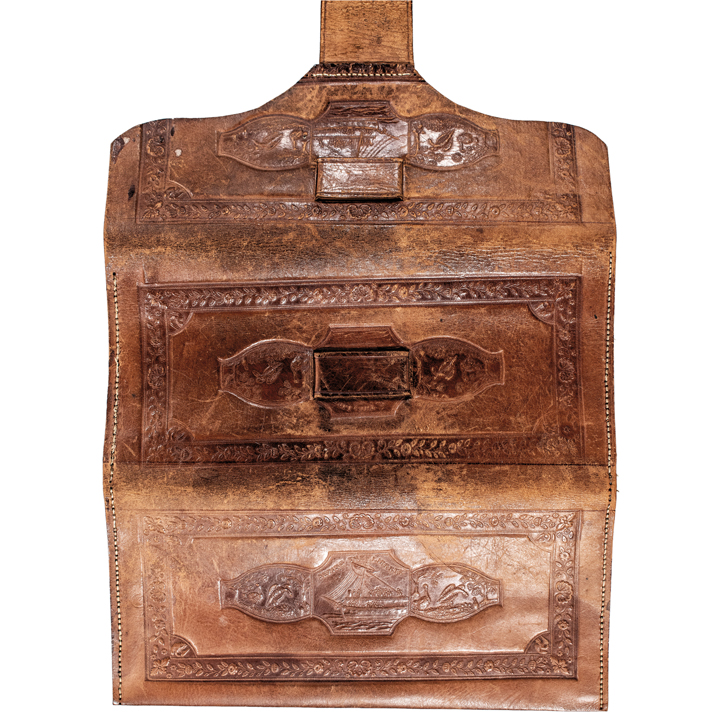
Early American Commemorative Sloop “Liberty” Affair Wallet Embossed 5 times with John Hancock's Sloop Liberty
Early American Historic Leather Wallet, Embossed Five Times with sharp impressions of a scene depicting the seizure of John Hancock's famous Sloop “Liberty” by Royal Boston Port authorities on June 10th, 1768, undated, used, Choice Very Fine. The first we have seen, this full Leather Wallet itself is clean with even outer wear, neatly stitched measuring 7" long x 3.4" tall, with the fully intact exterior leather strap being 8.2" long, with two interior compartments for currency. The seizure of the John Hancock's Sloop “Liberty” as shown, that was part of a long-running dispute between American Boston merchant (and smuggler) Hancock and the Royal Board of Customs Commissioners as part of their enforcement of the highly unpopular Townshend Acts. His sloop Liberty, seized for allegedly smuggling wine June 10th, 1768, was condemned and converted into a coastal guard ship. A band of patriots later burned the ship at Newport, R.I., in an act of direct defiance of Royal authority. The seizure also precipitated a widespread raft of mob violence against the King’s customs officials, another demonstration of the growing colonial resistance to British rule that led to the American Revolution and Hancock’s becoming an avid Patriot “Son of Liberty”. John Hancock was elected President of the Massachusetts Provincial Congress and was also elected to the First and Second Continental Congresses. He presided over the latter body from May 24th, 1775 through October 29th, 1777, thereby also becoming the First Signer of the Declaration of Independence July 4th, 1776. While the Sloop “Liberty” Affair took place in June of 1768. The incident was triggered by an earlier episode involving the smuggling of sixty casks of wine by Captain Daniel Malcolm on the evening of May 9th, 1768, involved customs collectors boarding one of Hancock's merchant ships named the “Liberty.” While onboard they discovered 25 casks of Madeira wine, a figure that far less than the ship was capable of carrying. Customs officials thought that this shipment was similar to the previous case of Malcolm's smuggling of wine. Thomas Kirk, the King’s Customs collector, claimed that there were likely around 100 casks originally and that the crew had off-loaded them so that only a quarter was left for customs tax payment. Kirk also stated that he was literally imprisoned aboard the “Liberty” for refusing to accept John Hancock's offered bribe. On June 10th, 1768 a riot erupted after the British began the process of towing the sloop Liberty to the Romney, a Royal Navy warship. Captain Malcolm, who was present when the British authorities boarded the Liberty, published an account in the Boston Chronicle detailing the seizure of the ship, as well as his confrontation with the Royal authorities. Subsequently, the Royal Customs House was attacked and the British sailors were forced to retreat to the warship Romney and then to Castle William in Boston Harbor. The chief collector of customs, Joseph Harrison, his son, and another customs official Benjamin Hallowell, were attacked by the mob when the patriot crowd failed to block the British sailors who were in the process of towing the Liberty. In all, a massive crowd totaling about 3,000 American colonists participated in the historic pre Revolutionary War riot. Hancock was president of the Massachusetts Provincial Congress and was elected to the First and Second Continental Congresses. He presided over the latter body from May 24th, 1775 through October 29th, 1777, thereby becoming the First Signer of the Declaration of Independence. John Hancock remained in Congress until he became Governor of Massachusetts after presiding over the State's Constitutional Convention in 1780. With the exception of a term in the Confederation Congress, 1785 to 1786, he served as Governor continuously until his death 8 October 1793. His last great service was rendered in 1788 when he presided over the Massachusetts convention which ratified the Constitution of the United States. |
|||||||||||
|
Auction Closing: Saturday, April 18th
at Noon Eastern Time • 9:00 AM Pacific Time |
|||||||||||