
|
Lot: 21 ♡
|
|||||||||||
|
1786 Previously Unknown Unique “Josiah Harmar” Signed Pennsylvania Continental Loan Office Form to an Original Founding “Society of the Cincinnati” Member Who Was Its First Elected Secretary & Acting Senior Army Officer
|
|||||||||||
|
|||||||||||
 |
|
||||||||||
|
Lot 21:
1786 Previously Unknown Unique “Josiah Harmar” Signed Pennsylvania Continental Loan Office Form to an Original Founding “Society of the Cincinnati” Member Who Was Its First Elected Secretary & Acting Senior Army Officer
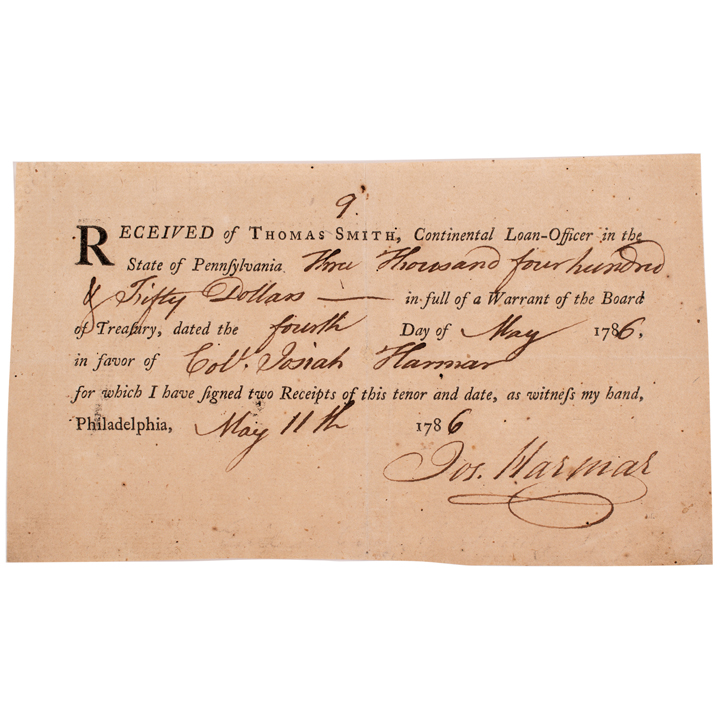
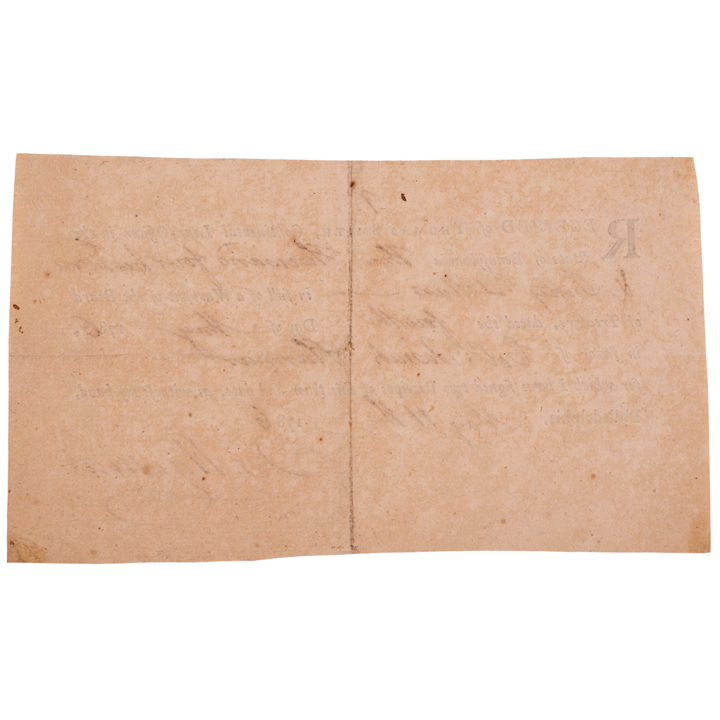
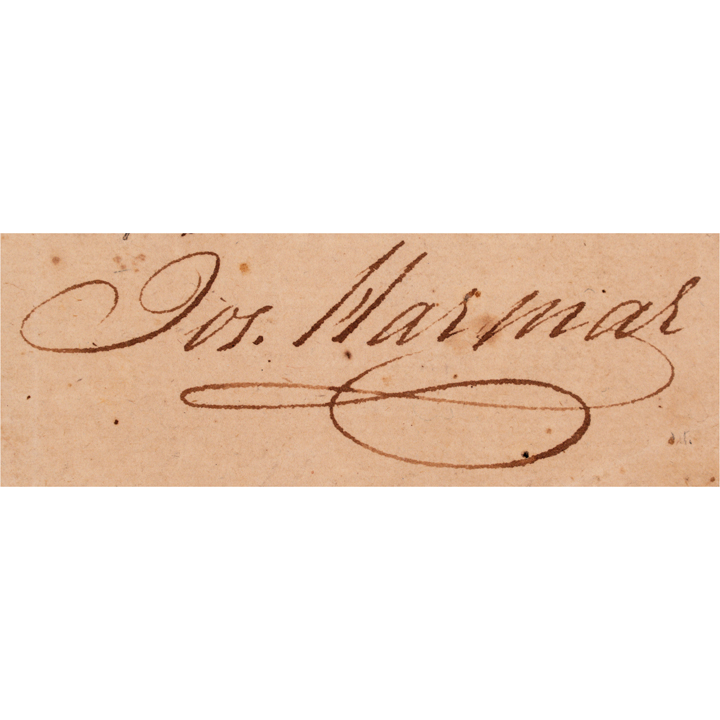
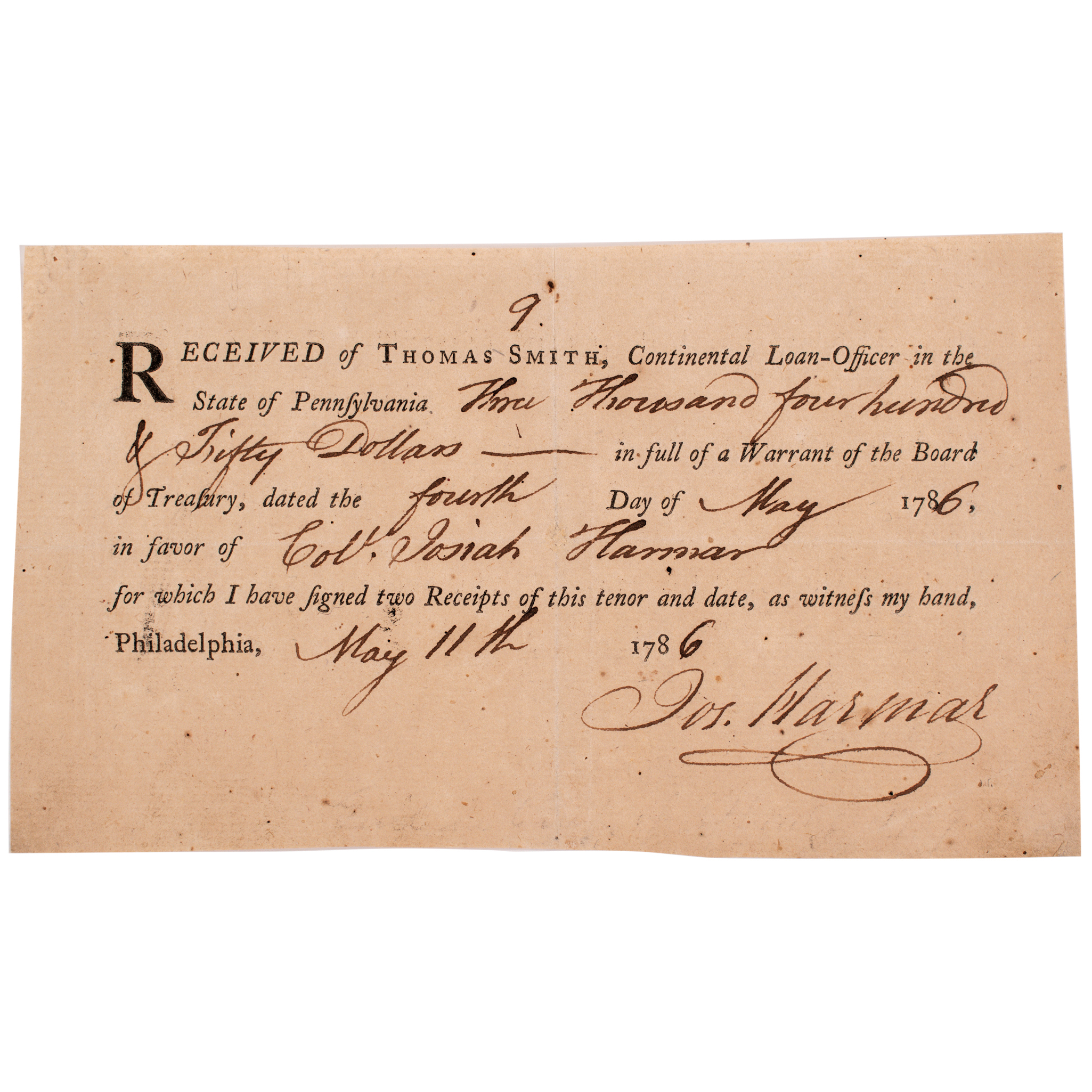
(1753-1813). Continental Army Officer during the American Revolutionary War, Officer in the Northwest Indian War, and for seven years the Acting Senior Officer in the United States Army (1784-1791) chosen by Congress in 1784 to relay the Ratified “Treaty of Paris” to U.S. Commissioner Benjamin Franklin in Paris (1783); an Original Pennsylvania “Society of the Cincinnati” Member when founded on October 4, 1783, on that same day Elected as the Society's First Secretary, serving for two years (1783-1785); Commanding General of the “First American Regiment”. May 11, 1786-Dated Post Revolutionary War, Previously UNKNOWN and Not Listed in Anderson, Partially-Printed Fiscal Document Signed, “Jos.(iah) Harmar,” Choice Crisp Extremely Fine+. We have not seen another of this form. This fully executed and issued original Continental Congress fiscal document on the State of Pennsylvania measures 7.25” x 4.25” and is both made payable to and Signed by Colonel Josiah Harmar, as the acting Commander in the United States Army under George Washington. Harmar signs this Continental Congress Payment Warrant issued from “THOMAS SMITH, Continental Loan Officer in the State of Pennsylvania” in the amount of $3,450 being issued on May 4, 1786 to “Col. Josiah Harmer” at Philadelphia. The Payment Receipt is boldly Signed in rich brown ink at Philadelphia on May 11th, 1786, by “Jos. Harmar” at bottom right, his signature measuring a large 2.75” long with flourish below. This apparently Unique, Unlisted Partly-Printed Continental Congress Fiscal Document is in very nice, pleasing condition. The sharp rich well printed black typeset text is printed on clean period laid paper with only faint folds. All printed and manuscript portions are extremely well executed, appearing bold in eye appeal. Josiah Harmar’s signature at lower right is large crisp and dark, measures nearly 2.75” long with nice flourish below. As Commander of the “First American Regiment,” Lieutenant Colonel, then General Harmar, was the Senior Officer in the United States Army from 1784 to 1791, commanding from Fort McIntosh. He also Signed the historic “Treaty of Fort McIntosh” in 1785 and was brevetted a Brigadier General in July 1787. Harmar was an Original Member of the Pennsylvania Society of the Cincinnati when it was founded on October 4, 1783. That very same day, Harmar was also elected as the Society's First Secretary, serving as Secretary of the Society of the Cincinnati for two years. Josiah Harmar (November 10, 1753 - August 20, 1813). American Revolutionary War Continental Army Officer and during the Northwest Indian War. He was the Senior Officer in the Army for seven years. Harmar started his military career during the American Revolutionary War, receiving his Commission as a Captain in 1775, serving under Generals George Washington and Henry Lee. Elevated to the rank of Leutenant Colonel by the Wars conclusion, Harmar was chosen by Congress in 1784 to relay the (1783) Ratified “Treaty of Paris” Document to Benjamin Franklin who was serving as the United States Commissioner at Paris. Harmar was an Original Member of the Pennsylvania Society of the Cincinnati when it was founded on October 4, 1783. That very same day, Harmar was also elected as the Society's First Secretary, serving as Secretary of the Society of the Cincinnati for two years. The Society of the Cincinnati, Inc., is a hereditary society with branches in the United States and France, founded in 1783, to preserve the ideals and fellowship of officers of the Continental Army who served in the Revolutionary War, founded by George Washington and Henry Knox. Now in its third century, the Society promotes the public interest in the revolution through its library and museum collections, publications, and other activities. It is the oldest hereditary society in the United States. To enforce American claims upon the Old Northwest, on June 3, 1784, the United States Congress called for a Federal regiment, known as the “First American Regiment,” of about seven hundred men, to be supplied and paid for by the states of Pennsylvania, New Jersey, New York and Connecticut. As the largest contingent of soldiers (about 260 men) came from Pennsylvania, the Commonwealth of Pennsylvania was allowed to choose the Commander of the “First American Regiment”. Thomas Mifflin, the powerful Pennsylvania politician and Governor, successfully pushed for his friend, Josiah Harmer, to become the First American Regiment’s Commander. As Commander of the First American Regiment, Harmar was therefore the Senior Officer in the United States Army, from 1784 to 1791 commanding from Fort McIntosh. He also Signed the “Treaty of Fort McIntosh” in 1785. The Treaty of Fort McIntosh was a treaty between the United States government and representatives of the Wyandotte, Delaware, Chippewa and Ottawa Nations of Native Americans. The treaty was signed at Fort McIntosh (present Beaver, Pennsylvania) on January 21, 1785. The same year that he ordered the construction of Fort Harmar near Marietta, Ohio. Harmar also supervised the construction of “Fort Steuben” near present-day Steubenville, Ohio. Harmar was brevetted as a Brigadier General in July 1787. Now as Brigadier General Josiah Harmar, he directed the construction in 1789 of “Fort Washington” named in honor of the new first President George Washington. Built on the Ohio River, this fort was built to protect the southern settlements in the Northwest Territory. General Harmar's force of Federal troops and militia from Pennsylvania and Kentucky were badly defeated by a tribal coalition led by Little Turtle, in an engagement known as "Harmar's Defeat", "the Battle of the Maumee", "the Battle of Kekionga", or "the Battle of the Miami Towns." When General Harmar reached Fort Washington on November 3, 1790, American public opinion was outraged when informed of his defeat. The fact that Harmar had never personally exposed himself to the danger of enemy fire, that news led to rumours appearing in the newspapers that he had spent the military campaign drunk in his tent. When the news reached New York, President George Washington wrote to a friend: "I expected little from the moment I heard he (Harmar) was a drunkard". General Harmar was subsequently Court-Martialed at his own request, on various charges of negligence and was subsequently Exonerated by a Court of Inquiry. After his resignation from the Army on January 1, 1792, General Harmar returned to Pennsylvania and served as the state's Adjutant General from 1793 to 1799. Josiah Harmar Died on August 20, 1813 (aged 59) at Philadelphia, Pennsylvania and was buried at Saint James of Kingsessing Churchyard, in Philadelphia. |
|||||||||||
|
Auction Closing: Saturday, April 18th
at Noon Eastern Time • 9:00 AM Pacific Time |
|||||||||||