
|
Lot: 4 ♡
|
|||||||||||
|
June 17, 1776 Continental Navy Report of Early Successes Mailed to John Hancock as President of the Continental Congress, About Five American Privateers Engaging British Naval Forces, with Docket Handwritten by John Hancock and written just Two Weeks Prior to July 4th, 1776
|
|||||||||||
|
|||||||||||
 |
|
||||||||||
|
Lot 4:
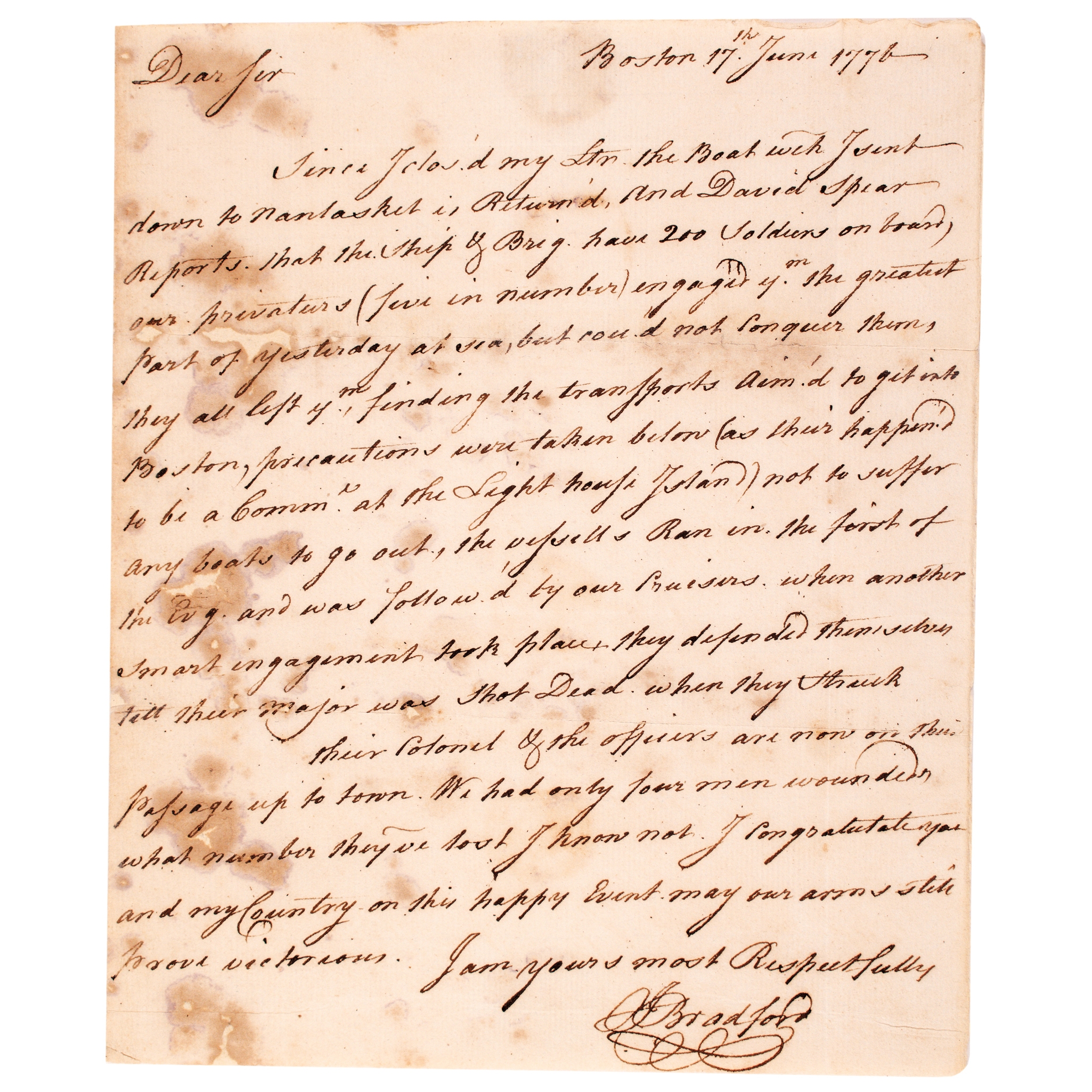
June 17, 1776 Continental Navy Report of Early Successes Mailed to John Hancock as President of the Continental Congress, About Five American Privateers Engaging British Naval Forces, with Docket Handwritten by John Hancock and written just Two Weeks Prior to July 4th, 1776
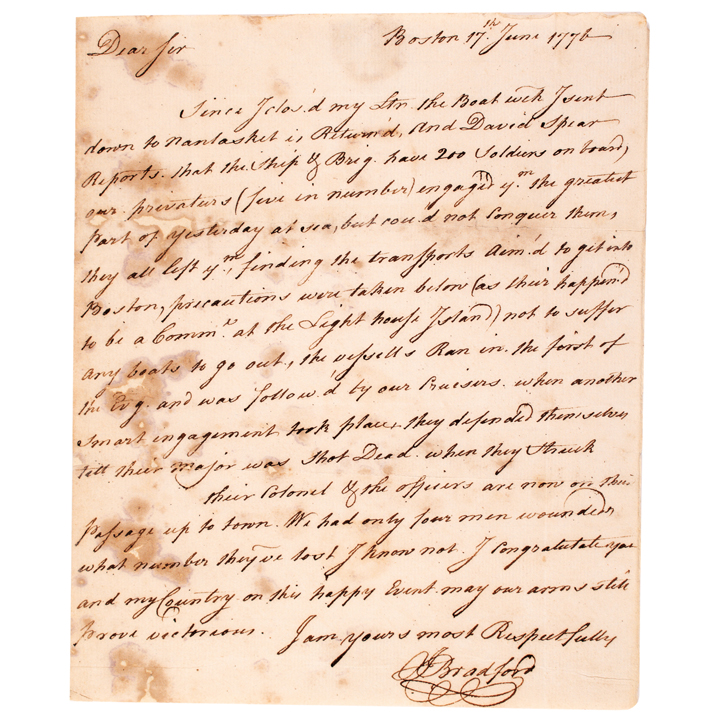
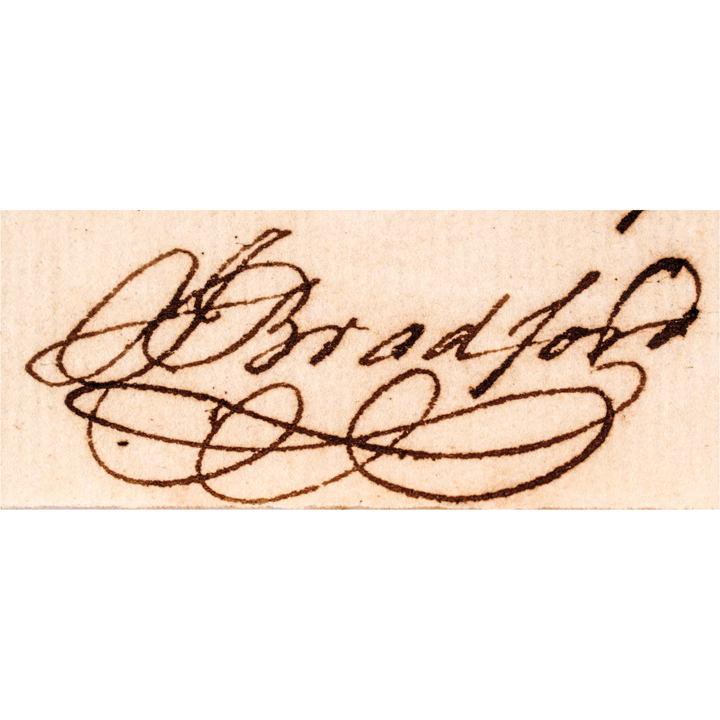
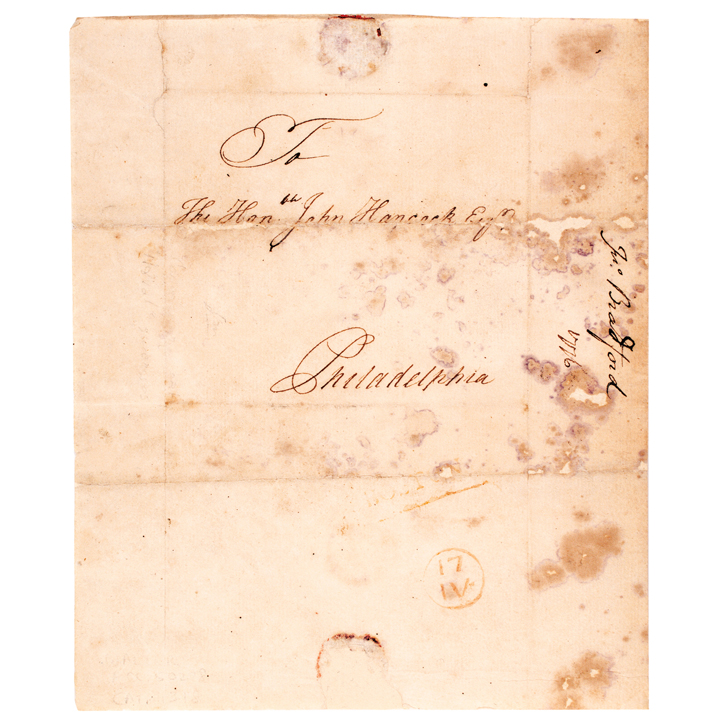
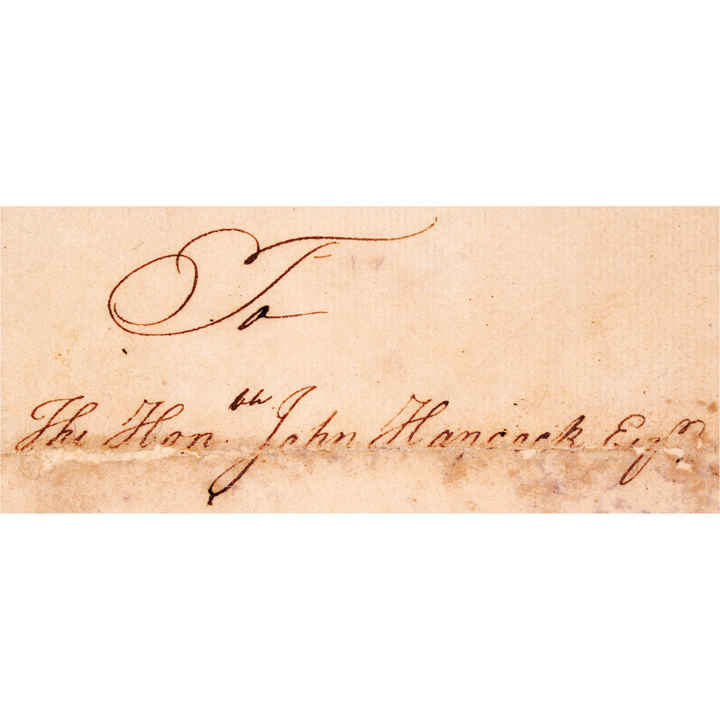
JOHN BRADFORD (1735-1784). Member of the Committee of Correspondence and The Committee of Secret Correspondence. In April, 1776, Congress appointed him “Agent for Prizes” for Boston, the most important such position in the colonies, and also as Continental Agent to assist the Marine Committee in purchasing and outfitting ships. (JOHN HANCOCK) (1737-1793). Acting President of the 2nd Continental Congress (May 24, 1775-1777) meeting in Philadelphia and the First to Sign the Declaration of Independence. *Note: Docket Handwritten by John Hancock. June 17, 1776-Dated Revolutionary War Period, Autograph Letter Signed, “J(ohn) Bradford” addressed to John Hancock (as President of the Continental Congress), 1 page, measuring about 7.75” x 6.25”, with Integral Transmittal Cover, having some expert conservation, Very Fine. Handwritten by Bradford on laid period paper, conserved wear on the fold is seen below its Integral Transmittal Cover which reads: “To --- The Honble. John Hancock Esqr. / Philadelphia”. A very light red “BOST” (BOSTON) city postal stamp, together with a Franklin circular red postal stamped “17 / IV” remains quite visible. Some miscellaneous conserved small tears at the edge from when its red wax seal was originally opened wear holes with that original red wax seal still fully intact located on the laid papers outer page margin edge, having scattered light tone spots present as shown. Written in dark brown iron gall ink, the text is clear and easy to read. This letter to President of the Continental Congress John Hancock ends with John Bradford’s bold signature with flourish below. The Docket written on the back page on the right edge of the Integral Transmittal Cover is written by John Hancock’s own hand, reading in full: “Jno. Bradford / 1776”. Captain John Bradford, a protege of John Hancock, was the Continental Army Agent and also the Naval “Prize Agent” for the Port of Boston during the American Revolutionary War. His responsibilities included assisting with the equipping of Continental and Privateer Ships and Troops at Boston Harbor. He was charged with dividing the sales proceeds of captured enemy ships, splitting proceeds between the government and the privateers. In this important letter, John Bradford writes to then President of the Continental Congress John Hancock, describing a Naval Sea Battle between British ships seeking to resupply Boston, and George Washington’s “Little Navy” of five ships. This important early American Revolutionary War Naval Warfare intelligence letter reads (spelling errors included), in full: “ Boston 17th June 1776 --- Dear Sir --- Since I clos’d my Ltr. the Boat wch (which) I sent down to Nantasket is Return’d, and David Spear Reports that the Ship & Brig. have 200 Soldiers on board, our privateers (five in number) engaged them the greatest part of yesterday at sea, but could not Conquer them, they all left them, finding the transports Aim’d to get into Boston, precautions were taken below (as there happen’d to be a Comm’e at the Light House Island) not to suffer any boats to go out, the vessells (sic) Ran in the first of the e(nem)y and was follow’d by our Cruisers, when another smart engagement took place & they defended themselves till their Major was Shot Dead when they Struck (their flag). Their Colonel & the officers are now on their Passage up to town. We had only four men wounded, what number they’ve lost I know not. I congratulate you and my Country on this happy Event, may our arms still prove victorious. --- I am your most Respectfully -- (Signed) Jn. Bradford” For many reasons, most all Revolutionary War letters containing this sort of historic content are extremely rare. Still rarer are letters like this one, describing firsthand reporting of early Revolutionary War naval engagements, and the importance of this letter is greatly increased when one reflects upon it describing one of the first true “Naval Battles” of the Revolutionary War, where both sides were armed and determined to overpower the other. Overall, this letter is easily readable and in pleasing condition for display. *Note: A similar “John Bradford” written and signed ALS sent to John Hancock as President of the Continental Congress just a month later, dated July 15th, 1776, with mention of Bradford’s receiving a copy of the Declaration of Independence and having a similar handwritten Docket by Hancock, sold for $27,500 in an East coast auction in April 2019. This current letter containing important intelligence from Boston from John Bradford is a truly rare original piece of Revolutionary War history, written and dated only Two Weeks Prior to John Hancock’s Signing the Declaration of Independence on July 4th, 1776. Provenance EX: Collection of Ambassador J. William Middendorf II; (Ex: The Hancock-Chase Collection, formerly housed at the National Museum of American History); to our Current Consignor. In May 1775, John Hancock was elected President of the Continental Congress, which was meeting in Philadelphia. The next month, the Congress chose George Washington (1732-1799) as commander of the Continental Army. During the eight years of war that followed, Hancock used his wealth and influence to help fund the army and Revolutionary cause. On July 4, 1776, (two weeks after this letter was written and dated) the Continental Congress adopted the Declaration of Independence, a document drafted by Thomas Jefferson (1743-1826) stating that the 13 American colonies were now free from British rule. The document also detailed the importance of individual rights and freedoms. As President of the Continental Congress, John Hancock is credited as the First Signer of the Declaration of Independence. His prominent, huge, and stylish signature became famous. (According to legend, Hancock boldly inscribed his name so the English king George III would not need glasses to read it.) Today, the term "John Hancock" is synonymous with "signature." After resigning as head of the Continental Congress in 1777, Hancock had his chance for military glory in 1778, when he led some 5,000 Massachusetts soldiers to recapture Newport, Rhode Island, from the British. Although the mission was a failure, Hancock remained a popular figure. Hancock went on to help frame the Massachusetts Constitution, adopted in 1780, and was elected Governor of Massachusetts by a wide margin that same year. In 1789, Hancock was a candidate in the first U.S. Presidential election but received only four electoral votes out of a total 138 cast. George Washington garnered 69 votes, while John Adams (1735-1826) captured 36 votes, earning the two men the Presidency and Vice Presidency, respectively. Hancock remained Governor of Massachusetts until his death at age 56 on October 8, 1793. Following an extravagant funeral, he was buried at Boston's Granary Burying Ground. John Bradford (1735-84) was a Member of the Committee of Correspondence and The Committee of Secret Correspondence. In April, 1776, Congress appointed him "Agent for Prizes" for Boston, the most important such position in the colonies, and as Continental Agent to assist the Marine Committee in purchasing and outfitting ships. PRIOR EAHA # 113397 |
|||||||||||
|
Auction Closing: Saturday, April 18th
at Noon Eastern Time • 9:00 AM Pacific Time |
|||||||||||