
|
Lot: 41 ♡
|
|||||||||||
|
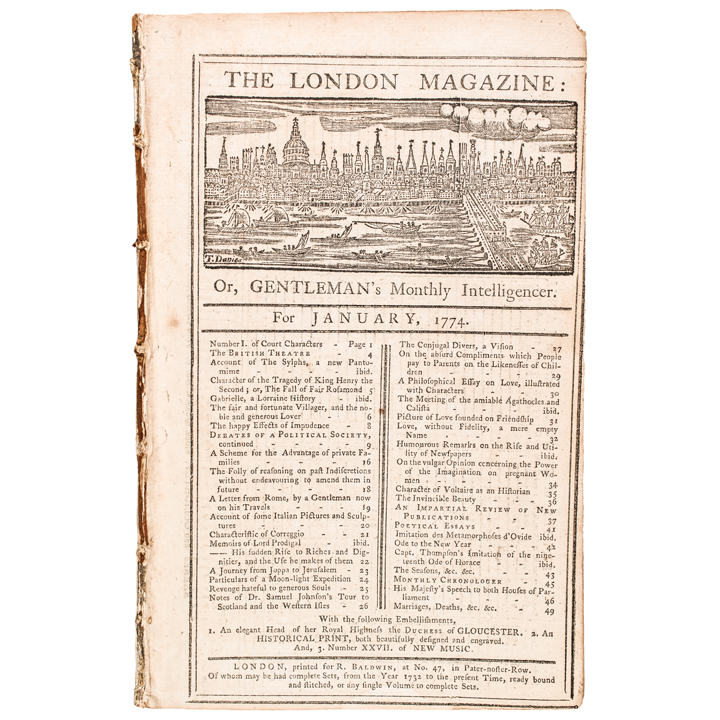
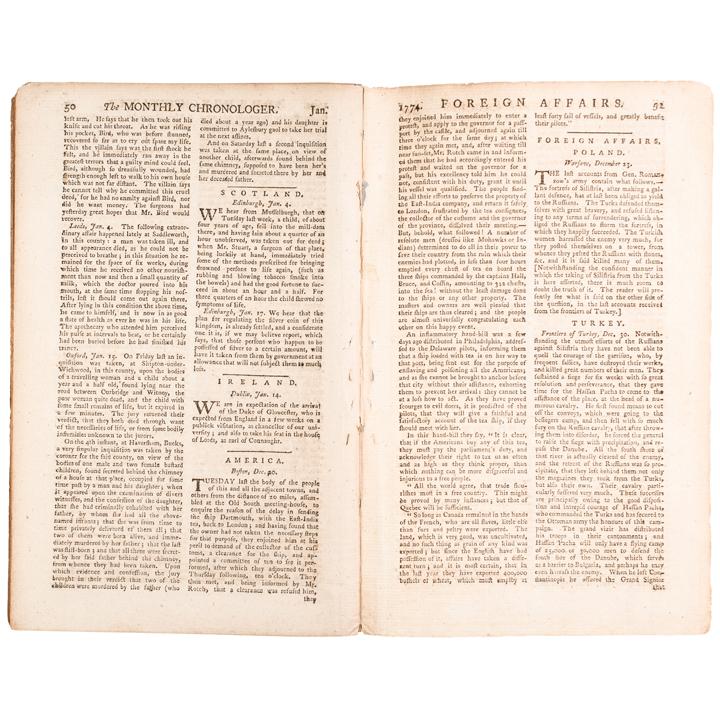
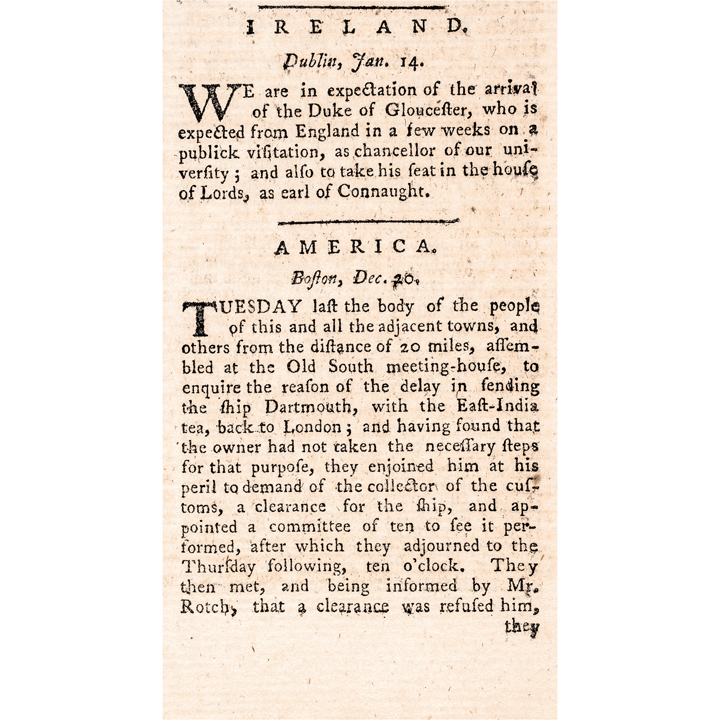
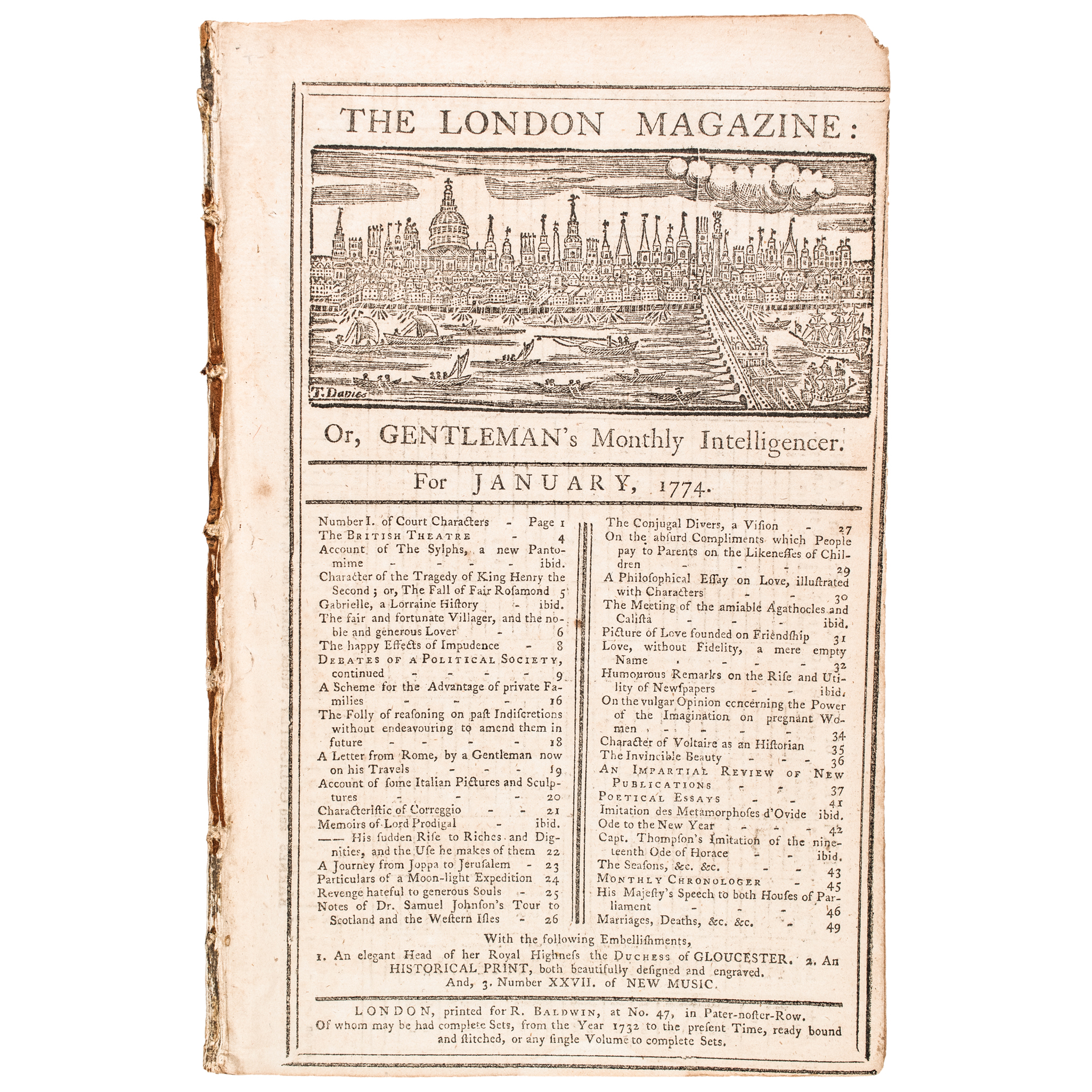
“BOSTON TEA PARTY” Extensive Report “America. - Boston, Dec. 20” London Magazine Published January 1774
|
|||||||||||
|
|||||||||||
 |
|
||||||||||
|
Lot 41:
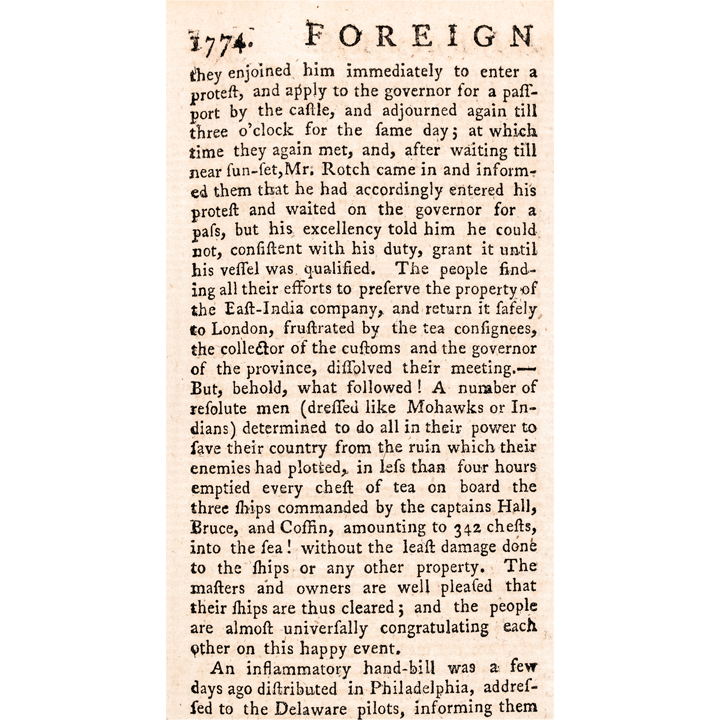
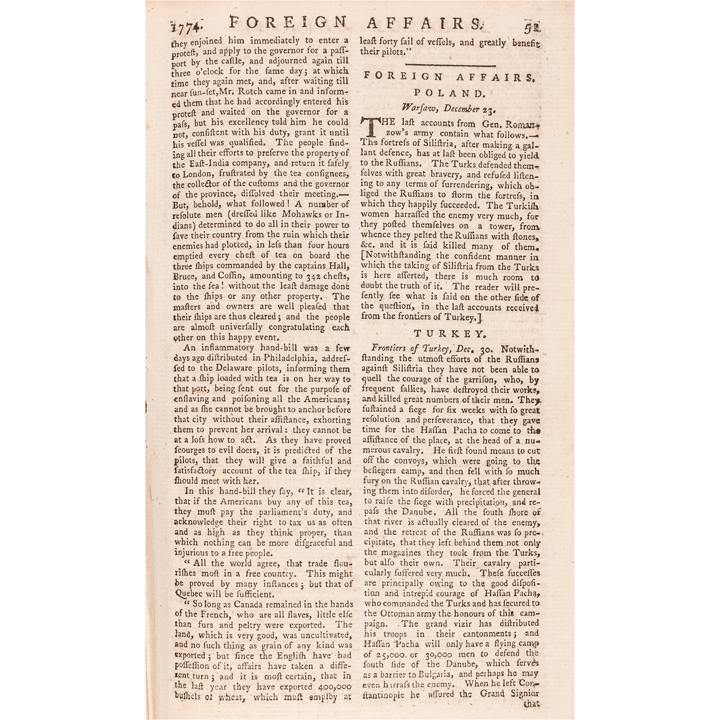
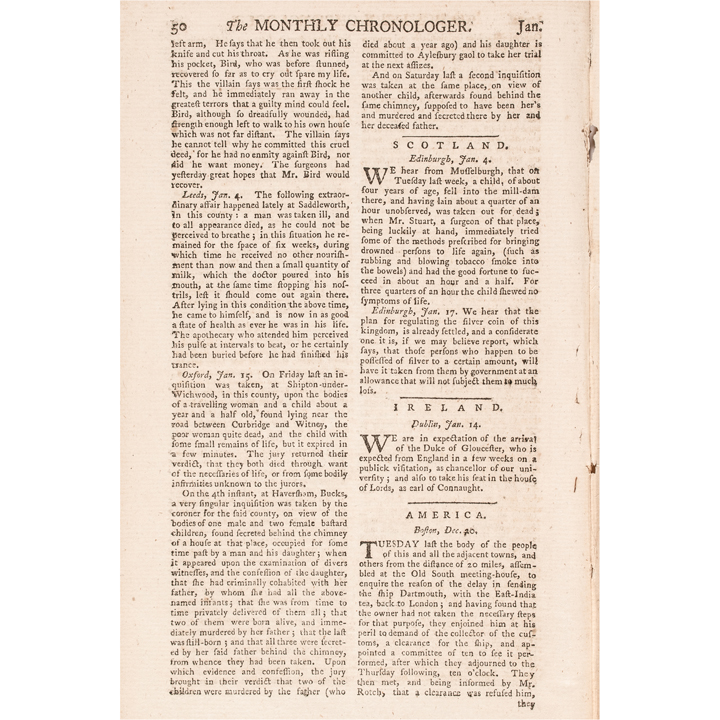
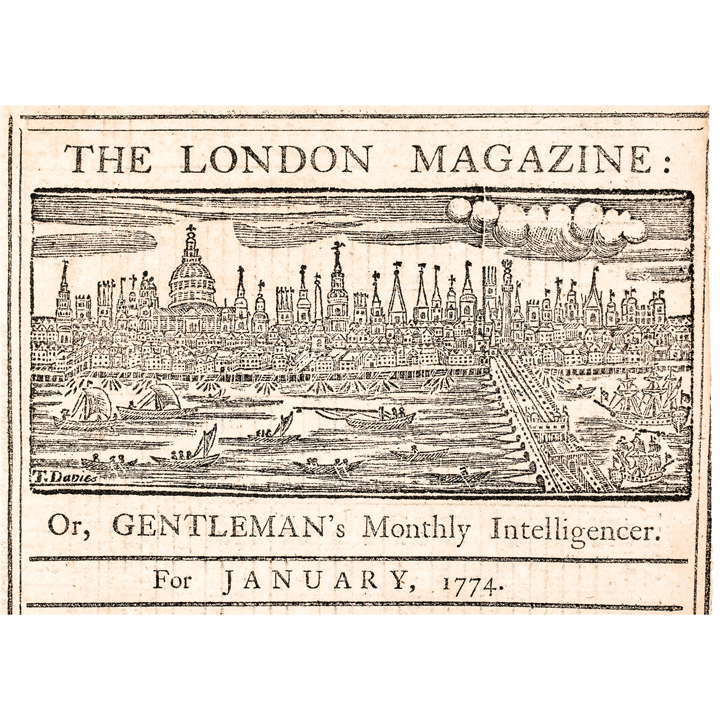
“BOSTON TEA PARTY” Extensive Report “America. - Boston, Dec. 20” London Magazine Published January 1774
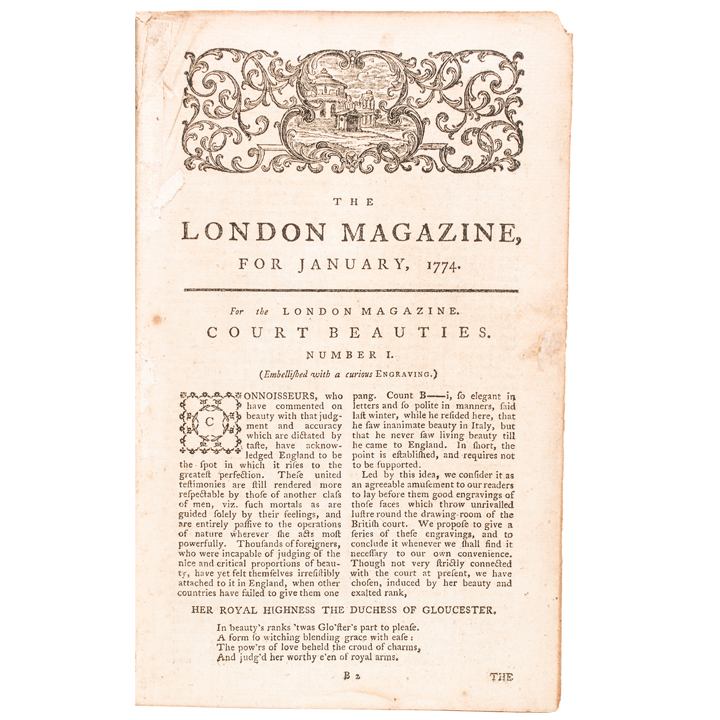
January 1774-Dated pre-Revolutionary War, BOSTON TEA PARTY in the London Magazine Published Extensive Report headed, “America. / Boston, Dec. 20th”, pages 50-51, Reporting News of the BOSTON TEA PARTY, Complete, Choice Very Fine. This is a very clean Complete Issue of January 1774 with early news of the Boston Tea Party and the facts surrounding the event which have reached London by ship and placed in publication. Starting at the lower right column on page 50, the report goes into greater detail as the story continues for the next half column of page 51. The typeset text is clear, the pages are clean and in near crisp condition, this issue disbound, so it remained in choice quality and fully complete. The printed Boston Tea Party report reads, in part: “The people finding all their efforts to preserve the property of the East-India company, and return it safely to London, frustrated by the Tea consignees, the collector of customs and the governor of the province, dissolved their meeting. --- But, behold what followed ! -- A number of resolute men (dressed like Mohawks or Indians) determined to do all in their power to save their country from the ruin which their enemies had plotted, in less than four hours emptied every chest of tea on board the three ships commanded by the captains Hall, Bruce, and Coffin, amounting to 342 chests, into the sea ! -- without the least damage done to the ships or any property. The masters and owners are well pleased that their ships are thus cleared ; and the people are almost universally congratulating each other on this happy event.” More news of the period in America with comments on Canada. A wonderful insight into the event which occurred in Boston on December 23, 1773, thus sent by ship, this is among the earliest reports of the Boston Tea Party to be printed in London, England. Choice condition. The Boston Tea Party: In April 1770, Parliament rescinded the Townshend duties on four of the five commodities that had been taxed; the duty on tea remained in force. Outraged American Patriots sought to shore up sagging efforts to boycott tea by appealing to merchants (nonimportation) and the citizenry (nonconsumption). But people loved their tea, and their resolve weakened. In the spring of 1773, the East India Company had a large amount of surplus tea on hand. To aid the failing company, thwart the smuggling of Dutch tea, and reassert its authority to levy taxes on the colonies, Parliament authorized the Tea Act on 10 May 1773. Tea sold in America would carry no duty for the East India Company; instead, the tea would be taxed at the point of entry in colonial ports. Consignees, or special agents, were appointed in Boston, New York City, Philadelphia, and Charleston to receive and sell the tea. In the fall of 1773, as newspapers publish the particulars of the East India Company plan, colonists learn that the tea is coming. Protests soon circulate. Writing out of Philadelphia, "Scaevola" rebukes the tea agents, calling them political bombadiers. Refusing a summons to resign their commissions, Boston's tea agents counter that they are the true sons of liberty. Demonstrating its decided disagreement, a patriot mob storms Richard Clarke's King Street shop on 3 November. Boston's consignees petition the governor to safeguard the tea once it arrives, but with British forces confined to Castle William since the unfortunate events of the Boston Massacre, Hutchinson is powerless to oblige. The streets belong to the opposition. On Sunday, 28 November, the Dartmouth, carrying 114 chests of tea, arrives in Boston Harbor. A meeting, open to all Bostonians and anyone from neighboring towns who chooses to attend (a group identified as the Body), is called at Faneuil Hall. When the crowd swells, it adjourns to Old South Meeting House. The Body speaks, demanding that the tea be returned, and the assembly appoints a watch of 25 men to guard Griffin's Wharf. From Philadelphia and New York, news arrives that anyone attempting to land the tea in those ports should beware an unwelcome visit. By December 2nd, consignees have resigned in three port towns, and the taunt goes forth: Will you shrink at Boston? By 15 December, the Eleanor and the Beaver, also both laden with tea, arrive at Griffin's Wharf. The law is clear: if the duty on the Dartmouth's tea is not paid by 17 December, the customs officer is authorized to seize the ship and its cargo. The governor, the ships' owners, and the tea consignees all refuse to return the tea to England. Voting at a 16 December meeting at Old South, the Body resolves to prevent the East India tea from being landed, stored, sold, or consumed. At the conclusion of the meeting, the crowd streams out onto the street, chasing 30 to 60 men dressed as Indians down to Griffin's Wharf. In what John Adams calls an intrepid "exertion of popular power," the men proceed to dump 342 chests of tea into the sea. Governor Hutchinson is incensed, calling the dumping of the tea high treason. Energized by their victory, boisterous patriots urge Bostonians, "keep up your courage." When news of the event arrives there, New York celebrates Boston's Indians, as does Philadelphia. Boston, once suspect, is now praised for its steadfast opposition to tyrannical English policies. BOSTON TEA PARTY, London Magazine, 1774, East-India, Mohawks, Indians |
|||||||||||
|
Auction Closing: Saturday, April 18th
at Noon Eastern Time • 9:00 AM Pacific Time |
|||||||||||