
|
Lot: 48 ♡
|
|||||||||||
|
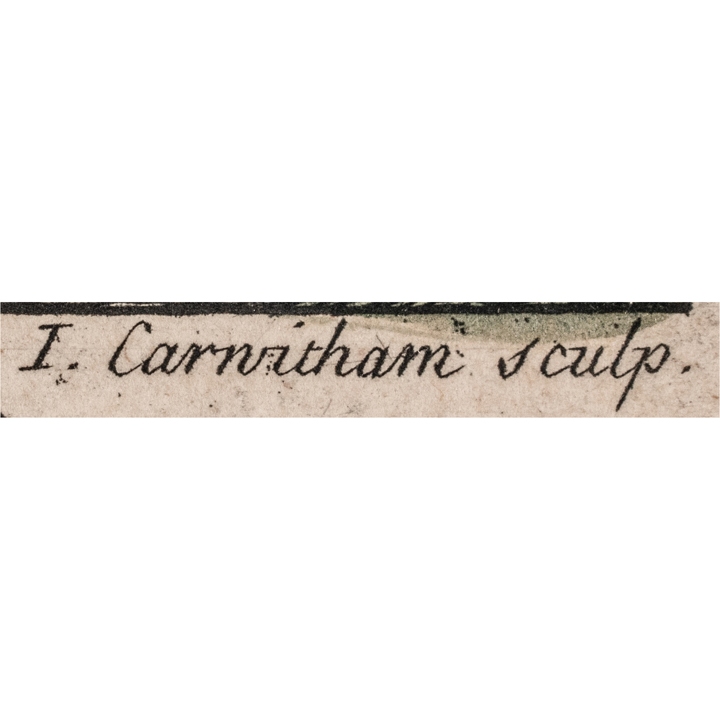
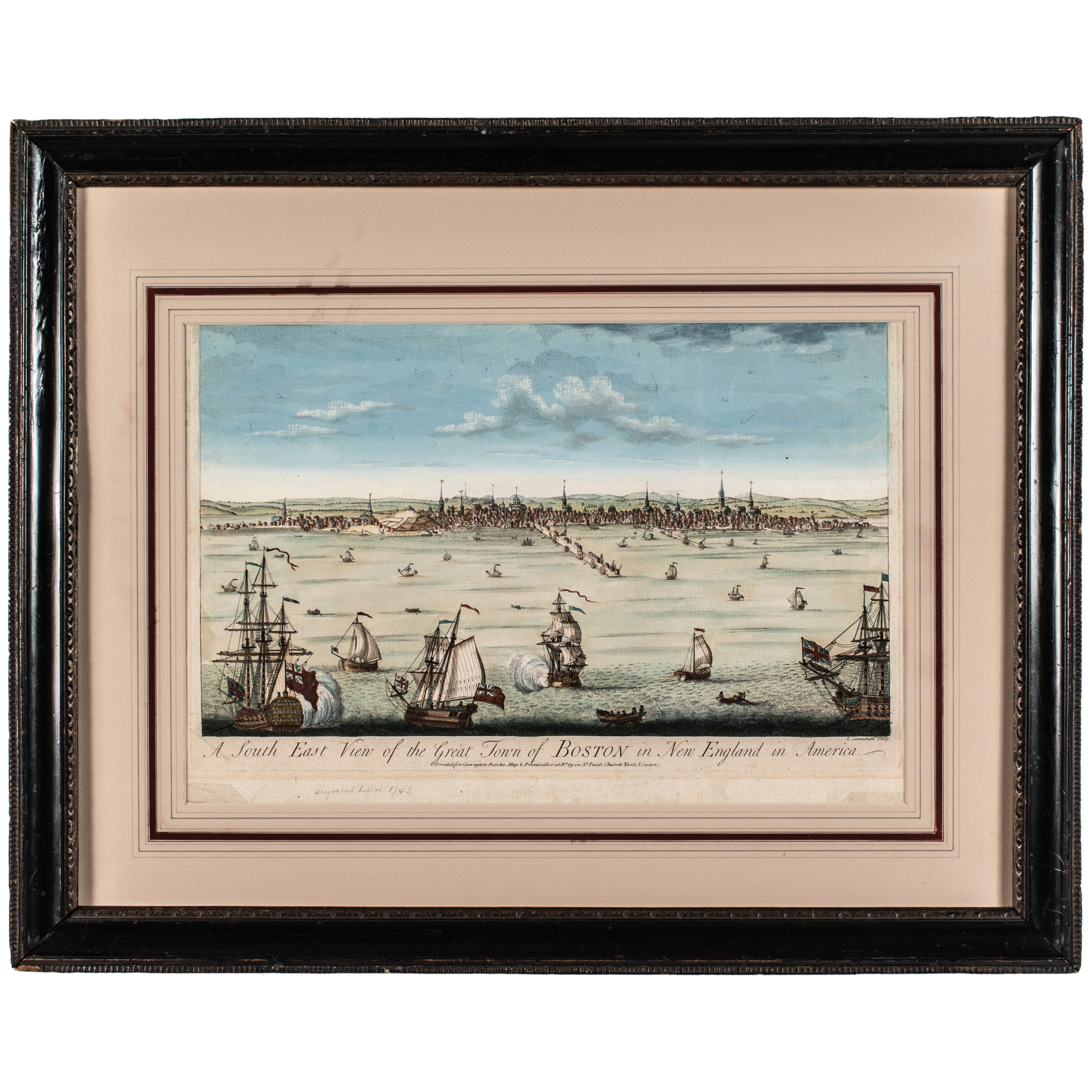
“A South East View of the Great Town of Boston in New England in America”, I. Carwitham Sculp. Rare Plate State
|
|||||||||||
|
|||||||||||
 |
|
||||||||||
|
Lot 48:
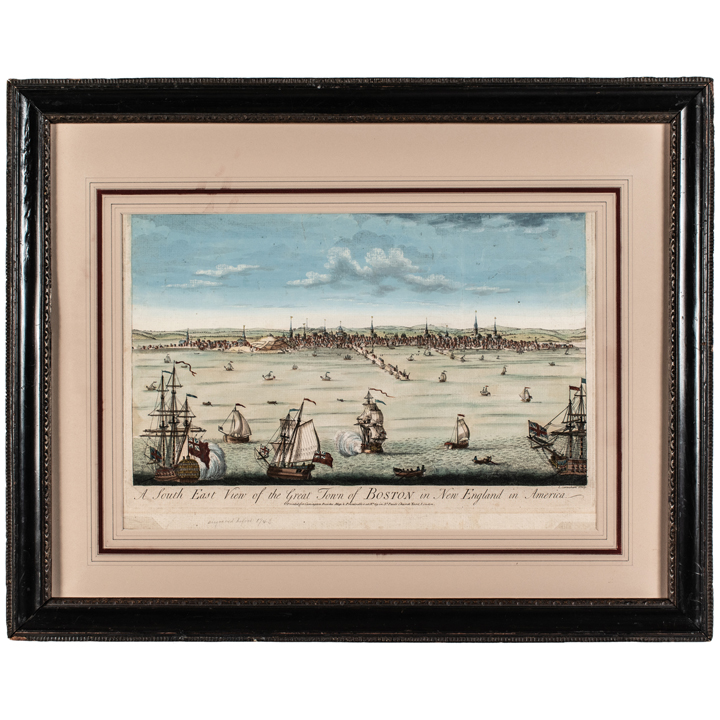
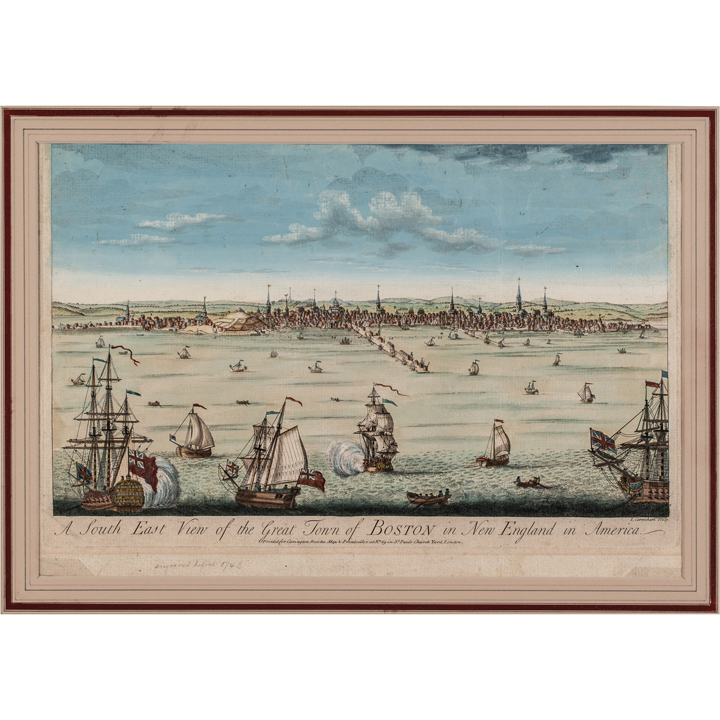
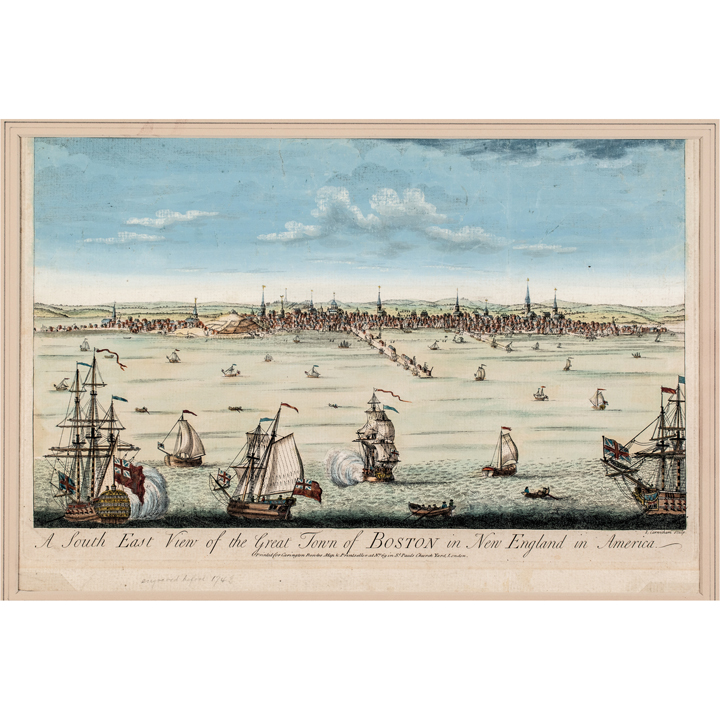
“A South East View of the Great Town of Boston in New England in America”, I. Carwitham Sculp. Rare Plate State
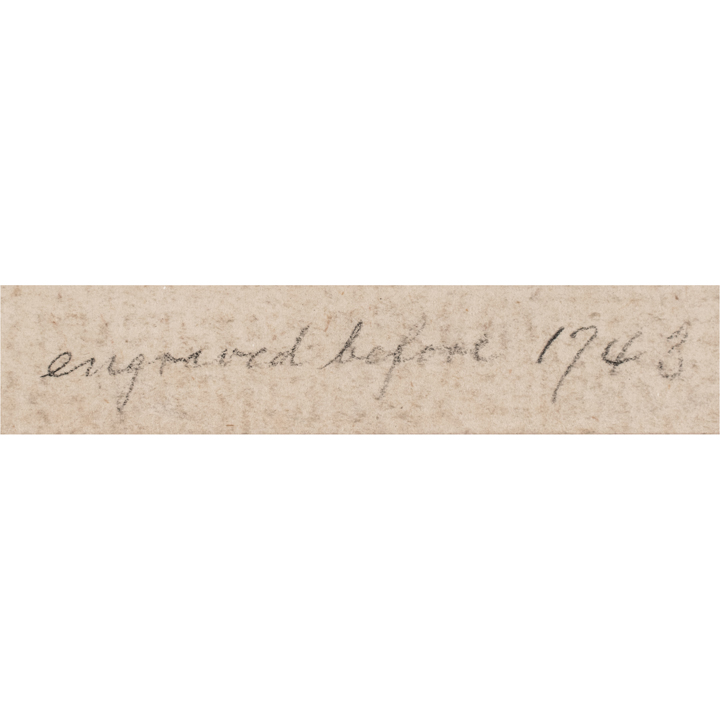
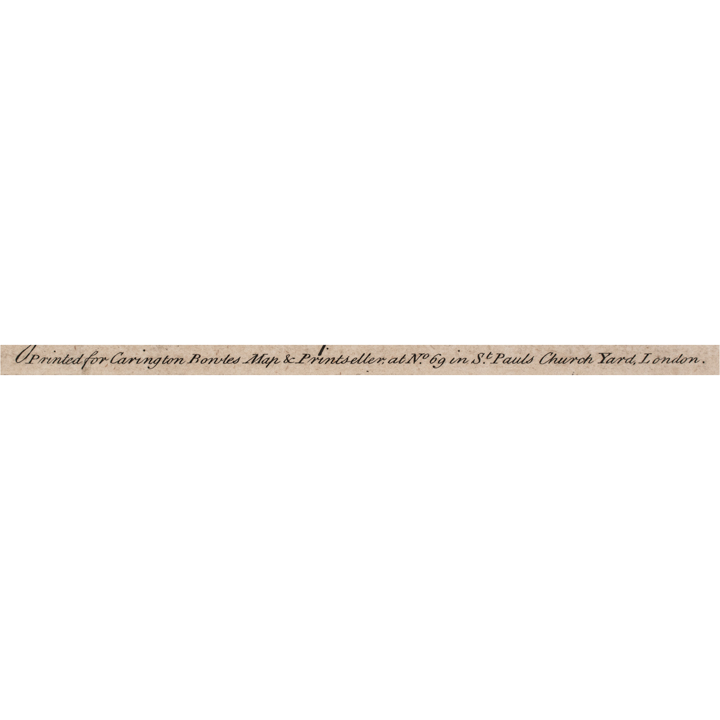
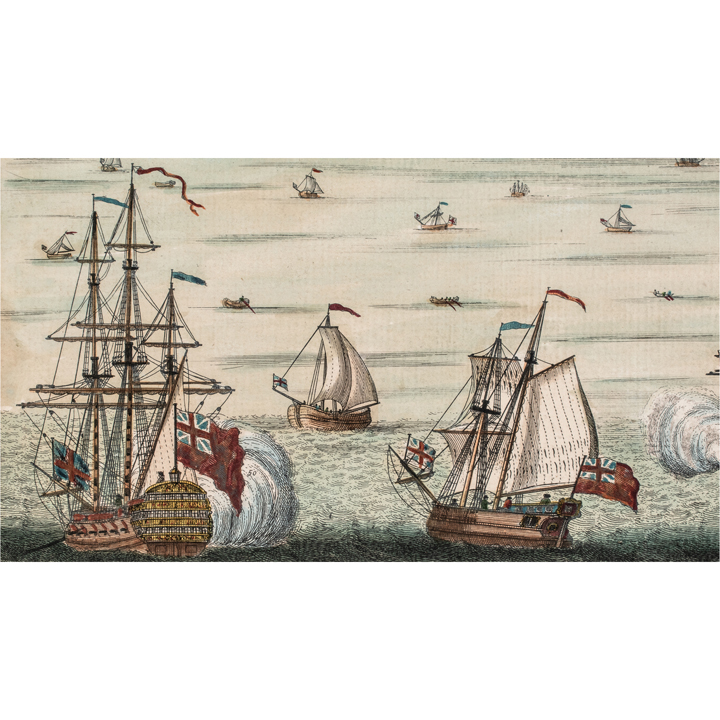
c. 1731 to 1736 Pre-1743 Colonial America View, Hand-Colored Engraving titled, “A South East View of the Great Town of Boston in New England in America. I. (John) Carwitham Sculp., Printed for Carington Bowles Map & Printseller, at No. 69 in St. Pauls Church Yard, London.” Framed, Choice Very Fine. An exceptionally vivid important example of this rare second state of this highly important early view of Boston engraved by John Carwitham, after the painting by the American Artist, William Burgis. The Copper-Plate size measuring 12 x 17.75 inches with its impression retained in the heavy period paper. Professional archival matted and wood framed, seen through special protective “True Vue” UV Plexiglas to overall 21 x 26.5 inches (not inspected out of its frame), as shown. This very early print does not show the number “34” in the lower left border identified on later prints. Carwitham's “View” is copied from the first state of the 3-sheet “View” of Boston created by William Burgis, “A South East View of the Great Town of Boston in New England in America”, first drawn in 1722, which was engraved by John Harris and printed in 1723. That work is generally considered to be the earliest printed view of Boston. William Burgis made his example from the vantage point of Castle Island, portraying the town from the South Battery to the North End, the view was engraved circa 1736. The dominant features are Long Wharf, Fort Hill to its left (i.e., south), and in the background the three peaks of the Trimontane, of which only Beacon Hill remains to this day. Boston, Massachusetts was once known as “Trimountaine”, referring to its three primary hills (Beacon, Whoredom, and an unnamed hill) during Colonial times. Also notable in this engraving are the many church spires, their height being exaggerated most probably for artistic, if not religious, purposes. The view shows Boston from the bay, showing the waterfront with the Long Wharf in the foreground, was apparently based on the first state of the 1723 Burgis view. When John Carwitham prepared the engraving, he added the Old South Meeting House and Hollis Street Meeting house, both built in 1731. The spire of Christ Church seen in the Burgis view -- then an architectural projection rather than a reality -- was retained by Carwitham even though the spire would not be fully built until about 1740. This engraving has excellent overall eye appeal having strong color and a fresh clean appearance. It is superior to the example which is in the same state (without “34”), as in the Yale University Art Gallery collection. This current example also has larger, wider outer margins and retains a clear impression of the original Copper-Plate embossed in the heavy period paper. Reference See: Deak Picturing America I, 86; cf. J. Winsor Memorial History of Boston II, pages 531-2; Stokes and Haskall American Historical Prints page 14; Cresswell 496; Pritchard & Sites: William Byrd II and His Lost History: Engravings of the Americas, pages 77-78. Published in: The American Revolution in Drawings and Prints; a checklist of 1765-1790 graphics in the Library of Congress / Compiled by Donald H. Cresswell, with a foreword by Sinclair H. Hitchings. Washington. Provenance: Collection of Ambassador J. William Middendorf II Bill of Exchange £450 Sterling New York “for the Supply of the North-American Expedition” Against Canada June 1756 43 June 18, 1756, New York, Rare French and Indian War Period, Partially-Printed Document Signed, “John Hunter”, a Third Bill of Exchange £450 Sterling, “for the Supply of the North-American Expedition, (Canada)” to His Majesty’s Treasury, London, PMG graded Choice Extremely Fine-45. This rare bill of exchange is for funds to be placed into the “Account of the Right Honorable the Lords Commissioners of his Majesty’s Treasury”. It is fully issued and signed at New York, a financial exchange payment document for L450 to that account in London. This is a Third Bill of Exchange for providing Supplies to the North American Expedition during the French and Indian War against Canada. Great Britain formally declared war on France on May 18, 1756. A clean well printed document on nicely watermarked high quality laid period paper. Holder states tape repair, toning which is even and very light with a barely visible tape repair on the upper left reverse corrects a straight cut that is almost imperceptible on the front. Serial number 10, payable to the Merchants of Thomlinson and Hanbury of London stating, “Mr. Joseph Mino for the use of the West Jersey Society -”. The term “Third Bill” indicates that the first and second bills were lost in transit, leaving this and the fourth bill as the last chances for redemption. The signature on the reverse proves that this one made it to its destination and was redeemed. Docket on the blank reverse reads, in full: “L450: Ster(ling) John Hunter - on Thomlinson & Hanbury June 8, 1756”. Of significant historic colonial ear war importance, “for the Supply of the North-American Expedition.” (1,200-1,600) |
|||||||||||
|
Auction Closing: Saturday, April 18th
at Noon Eastern Time • 9:00 AM Pacific Time |
|||||||||||