
|
Lot: 75 ♡
|
|||||||||||
|
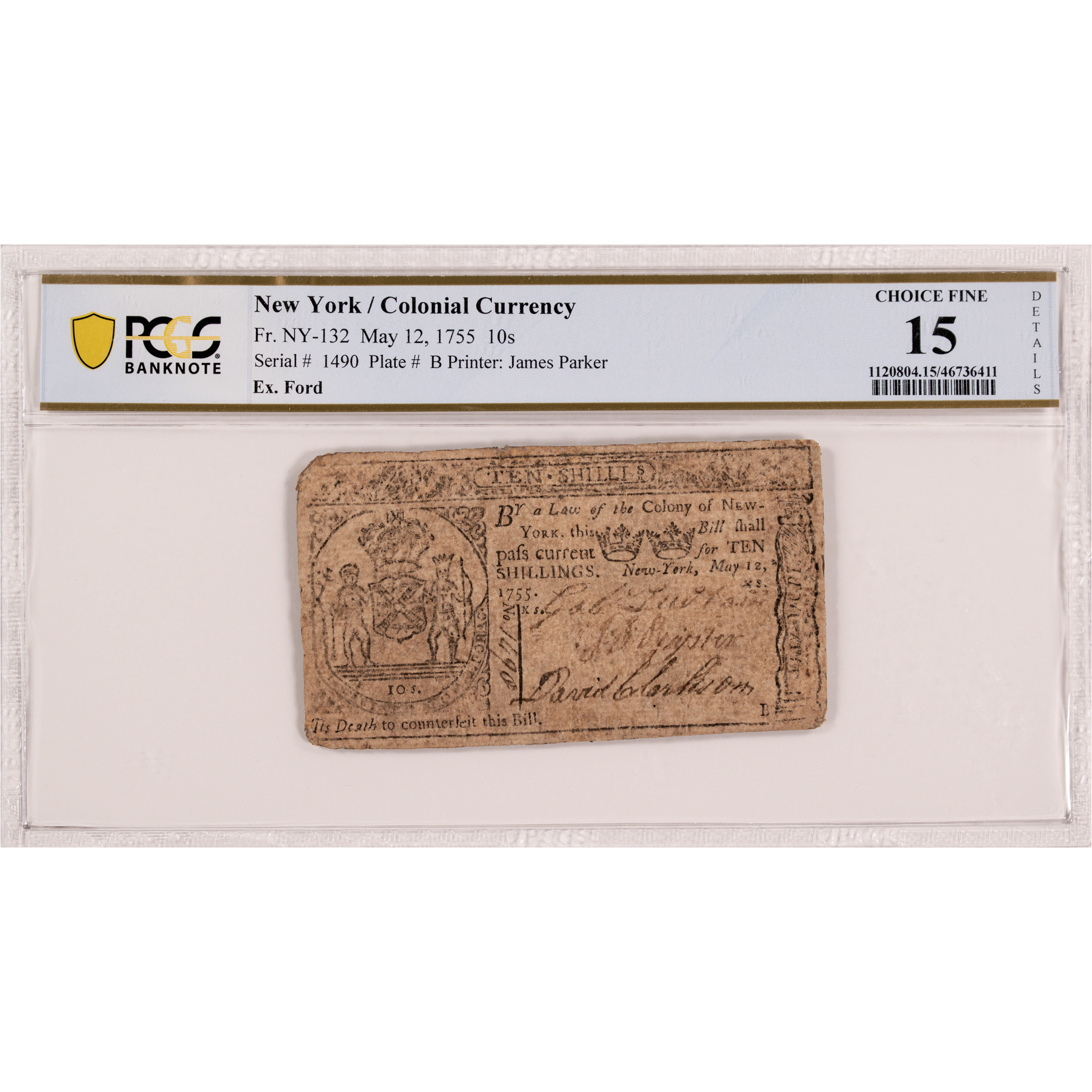
Exceedingly Rare May 12, 1755 New York Ten Shillings Only 200 Issued and to be Redeemed by November 1762 One of the Three Signers was a Particularly Lucky Fellow
|
|||||||||||
|
|||||||||||
 |
|
||||||||||
|
Lot 75:
Exceedingly Rare May 12, 1755 New York Ten Shillings Only 200 Issued and to be Redeemed by November 1762 One of the Three Signers was a Particularly Lucky Fellow
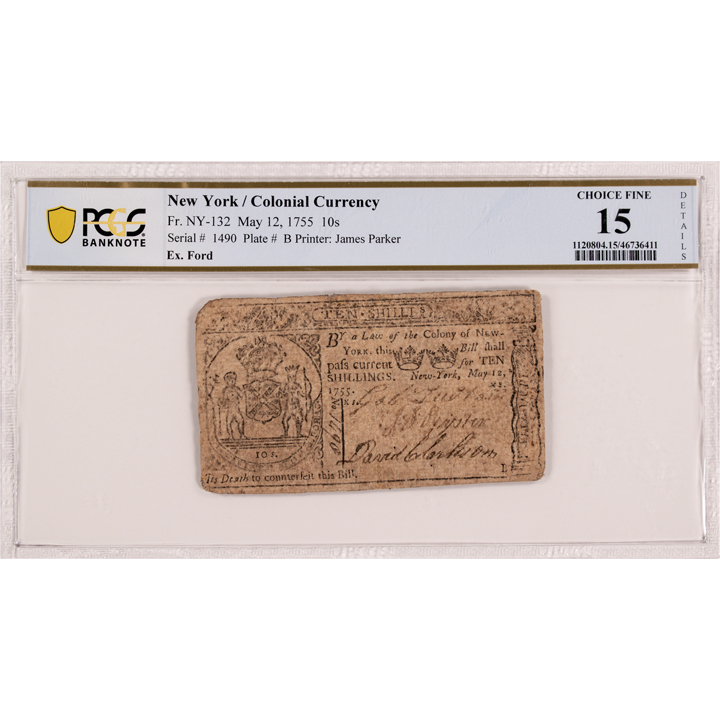
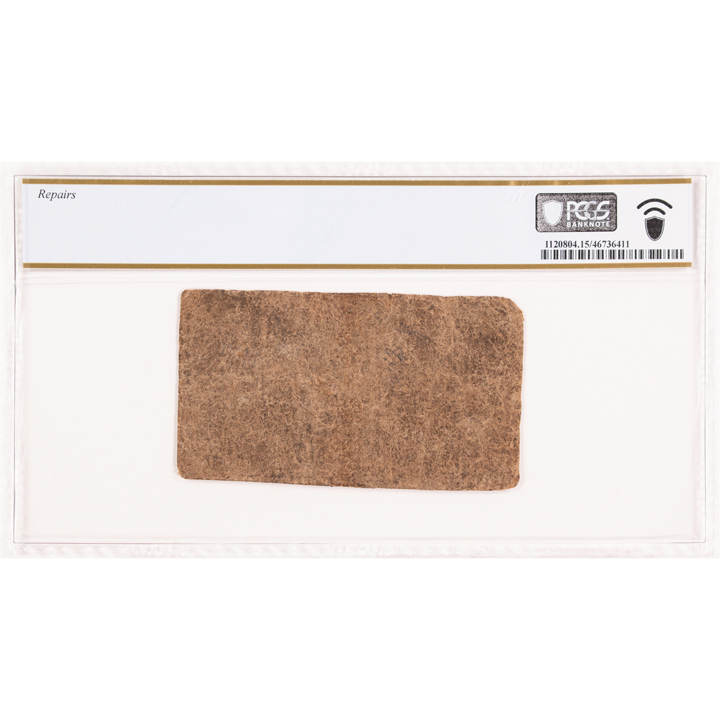
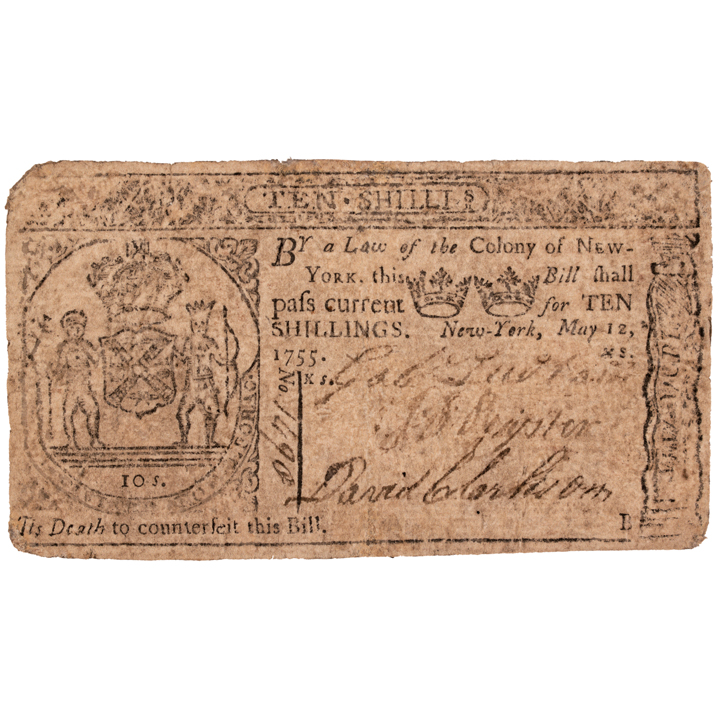
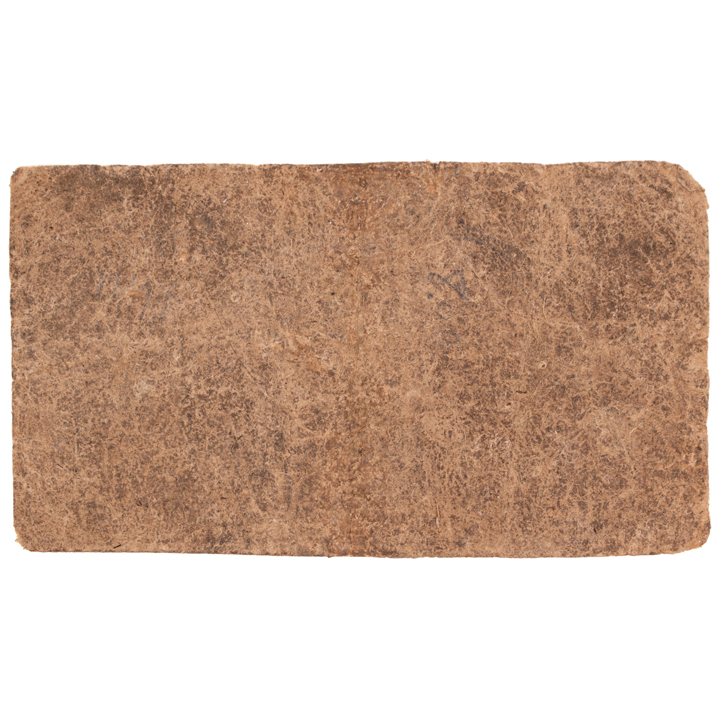
May 12, 1755 French & Indian War Era, New York, Ten Shillings, Plate B, Only 200 Issued and to be Redeemed by November 1762, PCGS Banknote graded Choice Fine-15. Fr. NY-132. Plate B. This whole and complete French & Indian War era note has easily readable text and is Signed by: Gabriel Ludlow, James DePeyster, and David Clarkson. (*In 1754 David purchased a lottery ticket to raise finances for the founding of the British Museum. David's ticket was a winner and his share of the 1st prize ticket was $25,000 in gold.) As made this note is printed on one side on a thick coarse paper by James Parker. It displays the New York Arms to the left side, with border cuts at top and right with the “10s” denomination inside Arms seal. Two crowns at top center act as Anti-Fraud Denomination Raising devices. Only 200 notes authorized of this denomination and from a rare series. The PCGS holder states repairs, although none are evident under close inspection. A rare early New York issue and low denomination with one record found for a raw AU sold in the 2004 Ford Auction which sold for $6,612 with most denomination values listed in Newman with a “dash” due to their extreme rarity. James Abraham de Peyster (1726-1799) was a prominent figure in the New York Colony, belonging to a wealthy and influential merchant family of Dutch descent. During the conflict (1754-1763), his family members held high-ranking military and administrative roles, such as his relative Johannes de Peyster III, who served as Paymaster of Troops. James remained a prominent citizen through the Revolutionary War years. The DePeyster family of New York was one of the first families of New Amsterdam, ranking among the wealthiest of New York during the early days of the American Republic. The DePeysters were also unapologetic Loyalists, serving in the King's forces during the American Revolution. After the war, the four sons left the United States for Canada and Great Britain. Ten years later, one son, Frederick DePeyster, returned to New York, embraced his Loyalist past, and utilized his British connections to become a prominent and successful merchant. The DePeysters went on to become true patriots, zealously supporting US interests in the War of 1812. The DePeyster family and the decisions they made to navigate their way from loyal subjects of the British crown to loyal citizens of the United States. How this transformation occurred challenges many of the preconceived ideas we hold both about the Revolution and the formation of the American identity in the years following the war. Gabriel Ludlow (1704-1773), was a successful merchant and slave trader active in New York City politics and the colonial assembly, the younger Gabriel's career began to ascend toward the end of this decade. Born in Queens County on April 16, 1736, Gabriel was the son of Gabriel Ludlow and Frances Duncan. In 1759, he was appointed a Governor of King’s College (now Columbia University), a prestigious role he held for over a decade. Later, due to his staunch Loyalist stance during the Revolution, Gabriel’s properties were confiscated, and he became the first mayor of Saint John, New Brunswick. David Clarkson Jr. (1726-1782). David and his brother Freeman were sent to England, probably for higher education. In 1748 or 49 David returned to New York. He married soon after his return to Miss Elizabeth French on the 3rd of May 1749 David's father-in-law, Philip French, had been the owner of a large tract of land in New Jersey, comprising a portion, if not the whole, of what is now New Brunswick. In 1749 David began construciton of a home on Whitehall Street which had been purchased from the City by his father in 1732. David and his family moved into the house on Oct. 25, 1752. David's father, who possessed considerable property, died in 1751. In 1754 David purchased a lottery ticket through his friend Thomas Streatfield to raise finances for the founding of the British Museum. David's ticket was a winner and his share of the 1st prize ticket was $25,000 in gold. |
|||||||||||
|
Auction Closing: Saturday, April 18th
at Noon Eastern Time • 9:00 AM Pacific Time |
|||||||||||