
|
Lot: 36 ♡
|
|||||||||||
|
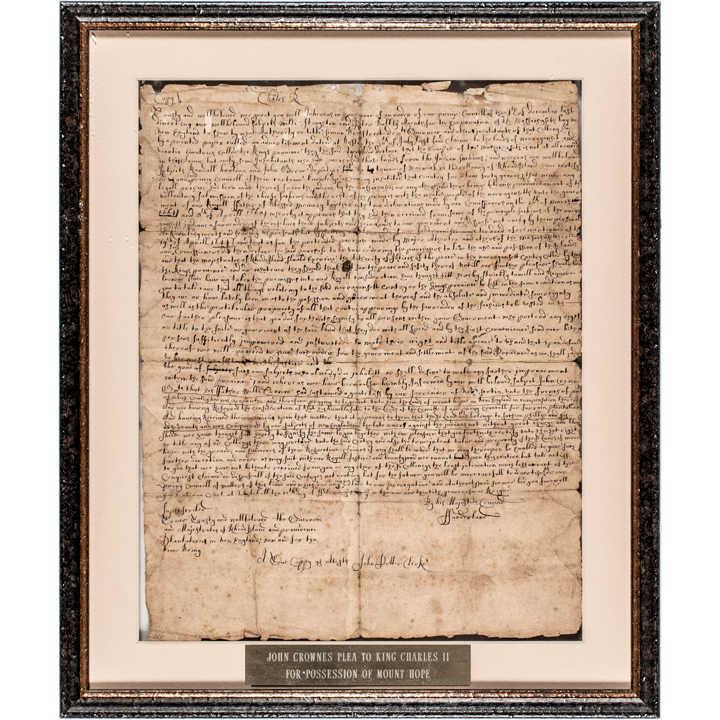
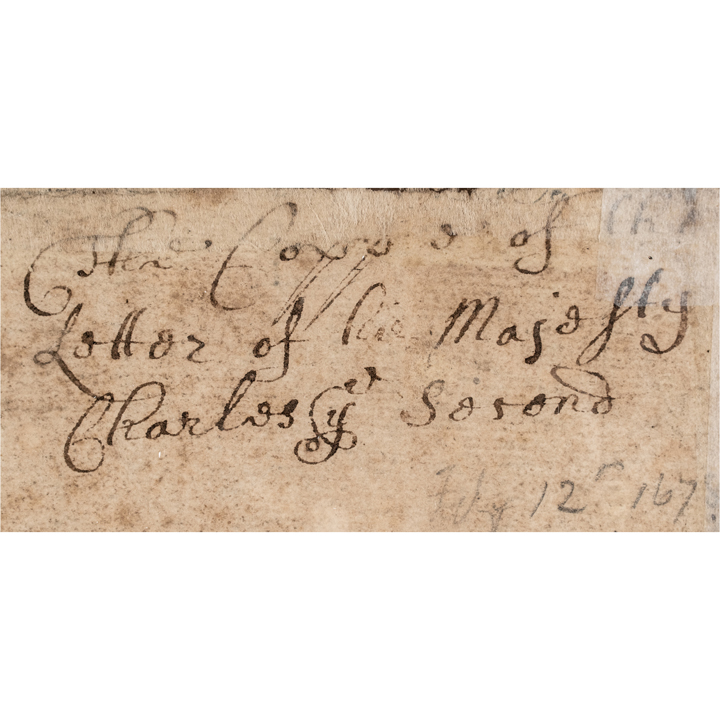
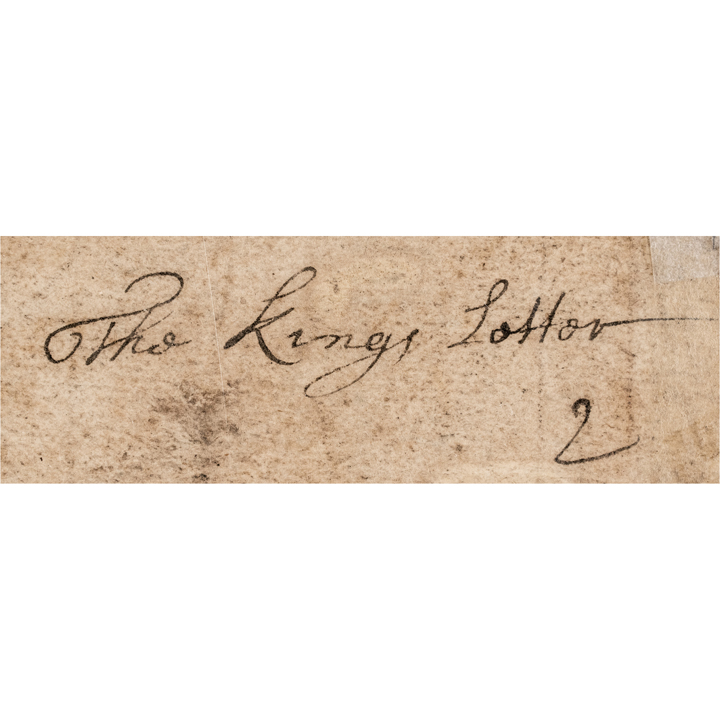
1678 “The Kings Letter, A True Copy of the Letter by his Majesty Charles Ye Second” February 12th, 1678 being in Response to John Crowne’s Plea to King Charles II for Possession of Mount Hope, in Rhode Island and Providence Plantations in New England to the Colonial Governor of RI
|
|||||||||||
|
|||||||||||
 |
|
||||||||||
|
Lot 36:
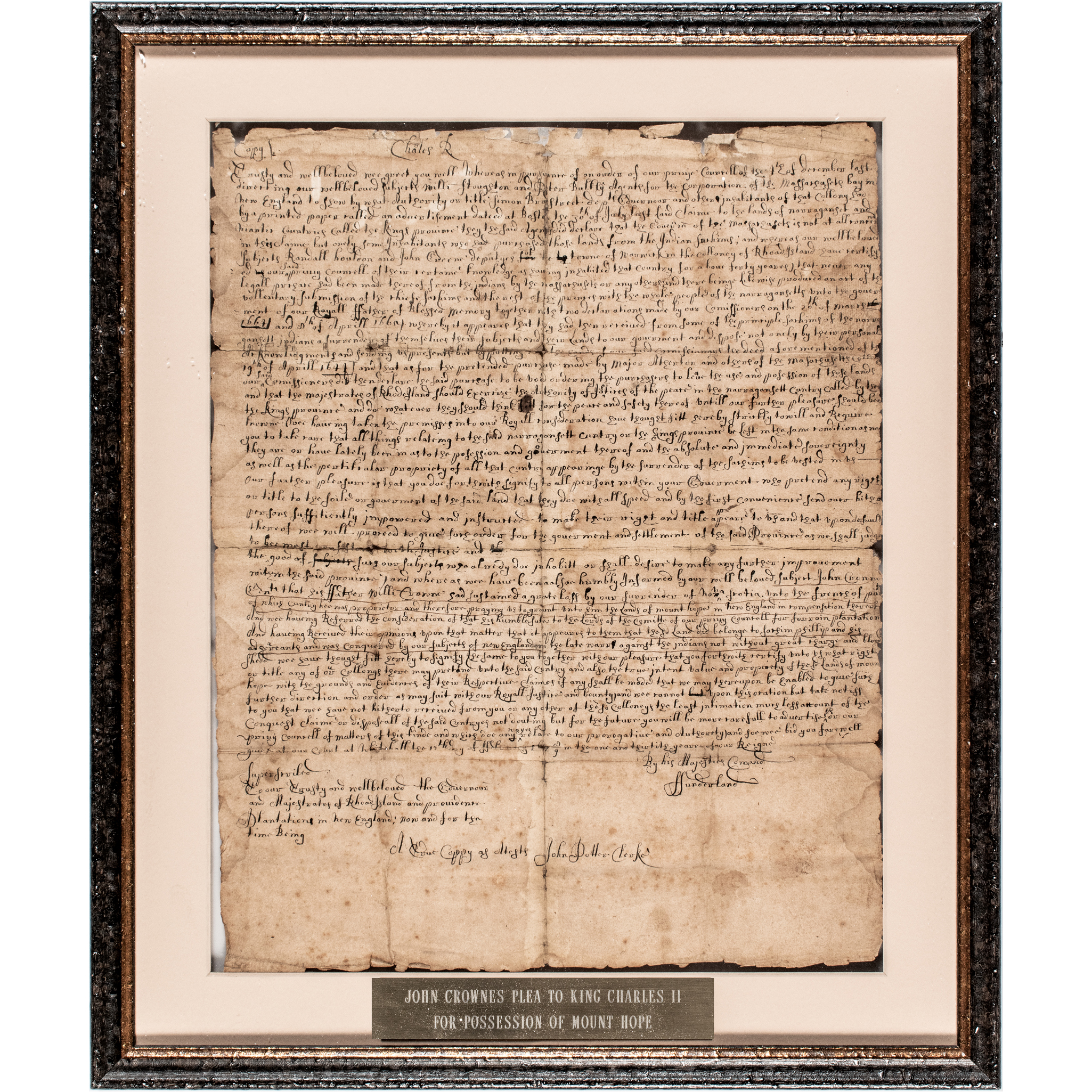
1678 “The Kings Letter, A True Copy of the Letter by his Majesty Charles Ye Second” February 12th, 1678 being in Response to John Crowne’s Plea to King Charles II for Possession of Mount Hope, in Rhode Island and Providence Plantations in New England to the Colonial Governor of RI
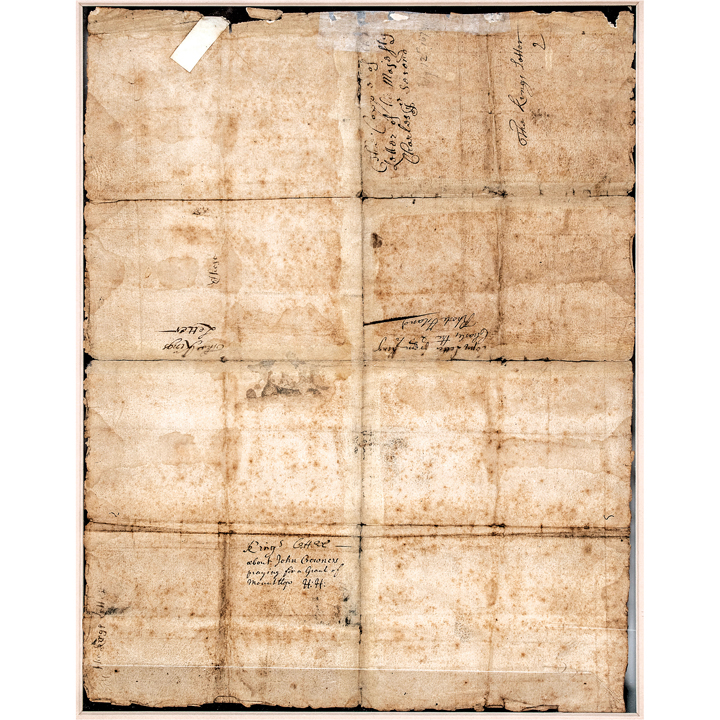
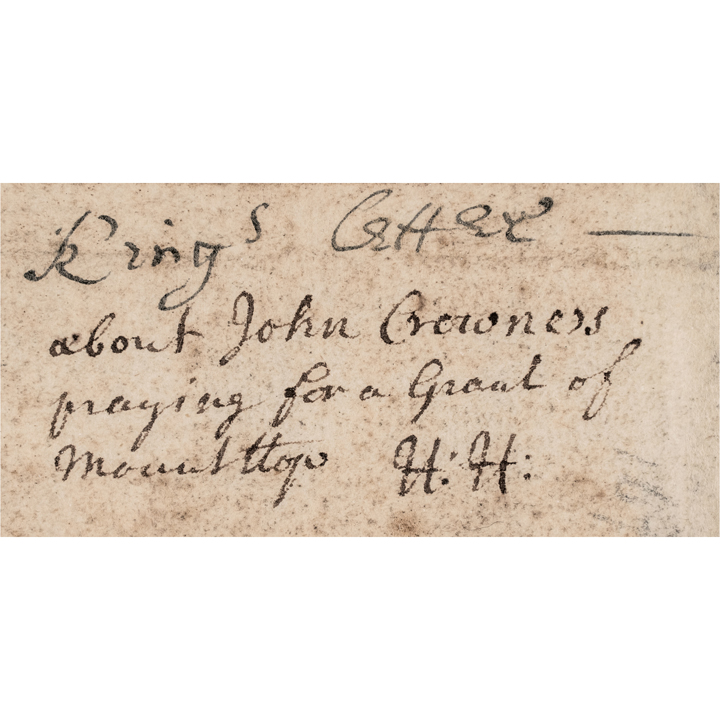
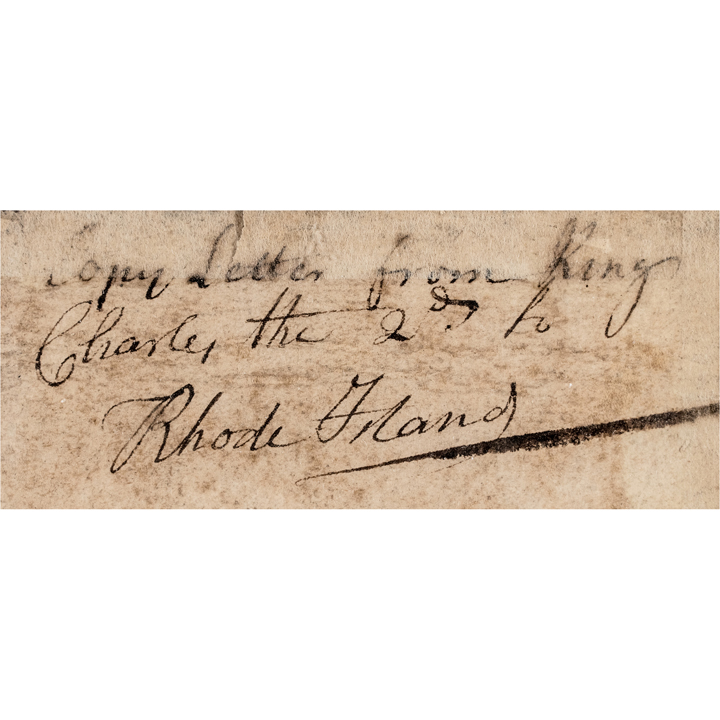
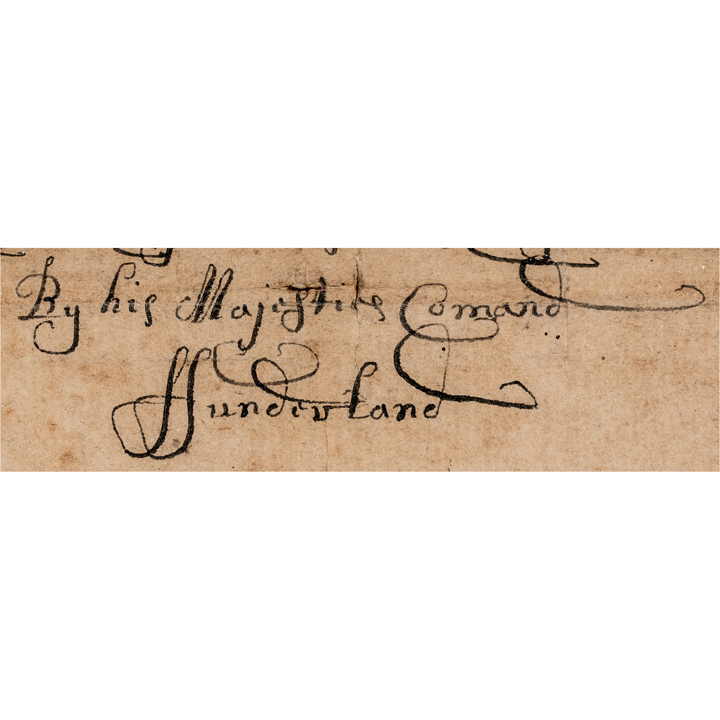
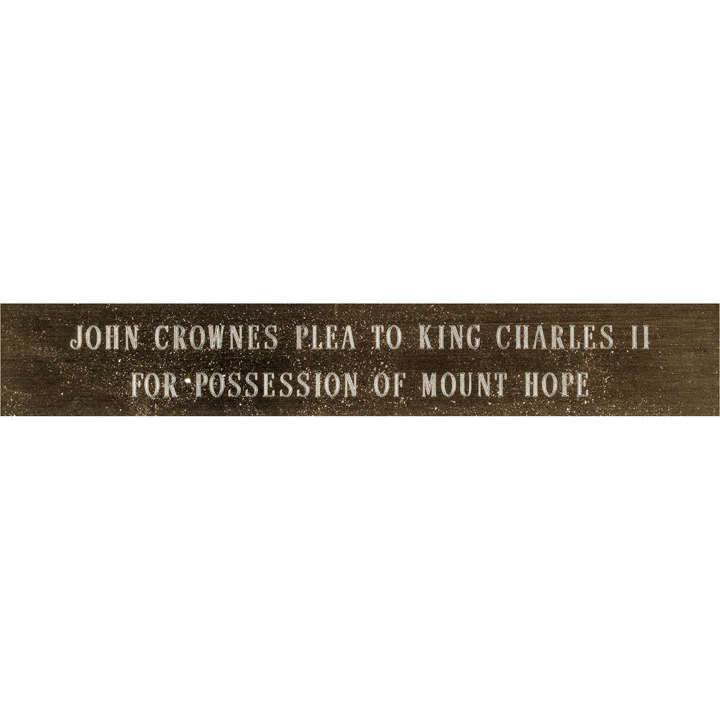
February 12, 1678-Dated Colonial America, Contemporary Official Copy of the Letter from King Charles II to the Governor & Magistrates of Rhode Island and Providence Plantations, Dealing with Sundry Matters Including the Claim of William Crowne For Possession of Cape Hope", Framed, Fine. Important Colonial “True Copy” Manuscript Document Signed, “John Potter, Clerk” (who attests its being a "true copy"), of the Letter from King Charles II of England, dated at Whitehall, “Feb. 12th in the 21st year of his Reign” (c. 1678). It is noted at lower left as: "Superscribed To our trusty and well beloved the Governor and Magistrates of Rhode Island and Providence Plantations in New England; Now and for the time being". This carefully handwritten period Document is 1 page, measuring 12" wide x 15.5" tall, Custom Professionally Framed to fully 16.5 x 19.75 inches, displayed within double-sided special UV Plexiglas. A Brass Plaque at bottom reads: "William Crowne's Plea For Possession of Cape Hope". In this Letter of reponse, King Charles II deals with disputes over land claims in New England, including land purchased "from the Indian Sachems". It is also the claim of William Crowne for compensation from King Charles II for Crowne’s losses when Nova Scotia was earlier ceded by the English to the French. William Crowne (1617-1682) had become Joint Proprietor with Colonel Thomas Temple, of the Province of Nova Scotia in 1656; He settled in Boston in 1657, and in 1674 he was living on Prudence Island, near Newport, Rhode Island. In 1667, King Charles II ceded Nova Scotia to the French under the Treaty of Breda, and the King made certain promises to William Crowne to compensate him for his losses. Here, Crowne's claim to "Cape Hope" (Rhode Island) as compensation, apparently refers to the Mount Hope area of Narragansett Bay, being present day Bristol, Rhode Island. Document is Headed: "Charles R", this letter, written in the Royal "We", reads in part: "Trusty and well beloved, we greet you. Well whereas in pursuance of an order of our Privy Council of the first of December last, directing our well beloved subjects Will Stoughton and Peter..., Agents for the Corporation of the Massachusetts Bay in New England, to know by what authority or title Simon Bradstreet, Deputy Governor, and other inhabitants of that Colony, had by a printed paper... an advertisement dated at Boston the 30th of July last, laid claims to the lands of Narragansett and Niantic... called the King's province. They the said Agents did declare that the Governor of the Massachusetts is not at all... In these claims, but only some inhabitants who had purchased those lands from the Indian Sachems; and whereas our well beloved subjects Randall Houldon and John... , deputies of the town of Warwick in the Colony of Rhode Island..." Mount Hope, Rhode Island, holds significant historical importance, particularly in the context of early Colonial America and its Native American history. Before European settlement, Mount Hope was known as Montaup and was a sacred and strategic place for the Wampanoag tribe, led by Chief Massasoit. It was located in the area now known as Bristol, Rhode Island. Montaup was not only a place of spiritual significance but also served as a political and military center for the Native American Wampanoag tribe. In 1632, the English established a trading post in the area. By 1636, Roger Williams, an English theologian, and Co-Founder of Rhode Island, purchased the Mount Hope lands from the Wampanoag Sachem, Massasoit. Williams was a proponent of religious freedom and established Rhode Island as a colony where individuals could practice their faith without interference from the government. The event referring to here could involve the interactions between the English settlers and the local Native American tribes, particularly the Wampanoag tribe led by Chief Metacom (also known as “King Philip” by the English colonists). Mount Hope, located in present-day Bristol, Rhode Island, was the seat of power for the Wampanoag tribe. John Clarke (1609-1676) was a physician, Baptist Minister, and Co-Founder of the Colony of Rhode Island. He was instrumental in securing the Rhode Island Charter of 1663 from King Charles II, which granted religious freedom and established a self-governing colony. John Clarke was also involved in negotiations with Native American tribes in the region. This current Document is a direct plea from John Crowne to King Charles II regarding his claim to the possession of Mount Hope in 1681, after the English New England Colonies settler’s military success ending “King Philip’s War” (June 20, 1675 - April 12, 1676). A highly important, likely Unique Document. Provenance: Collection of Ambassador J. William Middendorf II Mount Hope, known to the Native Americans as “Montaup,” was the stronghold of the Wampanoag tribe, led by Metacom, also known as “King Philip”. The area became central to King Philip's War (1675-1676), a conflict between Native American tribes and English settlers in New England. In 1643, the English settlers formed the “New England Confederation,” which was a military alliance established for defense against various threats, including attacks by Native American tribes. In 1675, tensions between the English settlers and the Native Americans erupted into “King Philip's War,” named after Chief Metacom. King Philip's War was fought in 1675 and 1676. It was the first war between English Colonists and Native American Indians. During the war, Mount Hope was a significant battleground, and it eventually fell under English control. The New England Confederation forces overwhelmed King Philip's forces. King Philip was killed at his stronghold, Mount Hope, on August 12, 1676. The New England Confederation and its Indian allies won the war. In British American colonial history, King Philip's War, that pitted Native Americans against English settlers and their Indian allies, was one of the bloodiest conflicts (per capita) in U.S. history. [Colonial America, King Philip's War, 17th Century America] [King Charles II, Rhode Island, Native American History] [Manuscripts, Documents, Royal Correspondence] |
|||||||||||
|
Auction Closing: Saturday, August 29th
at Noon Eastern Time • 9:00 AM Pacific Time |
|||||||||||