
|
Lot: 186 ♡
|
|||||||||||
|
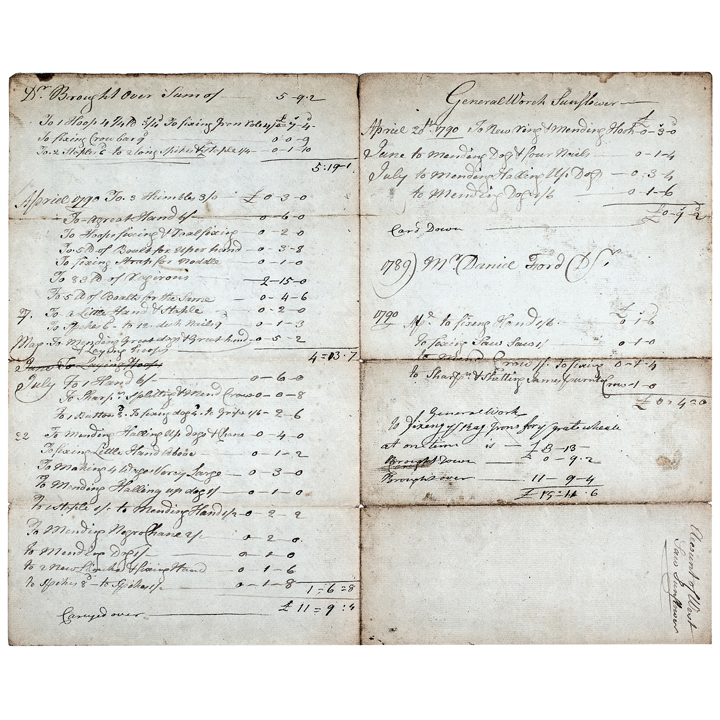
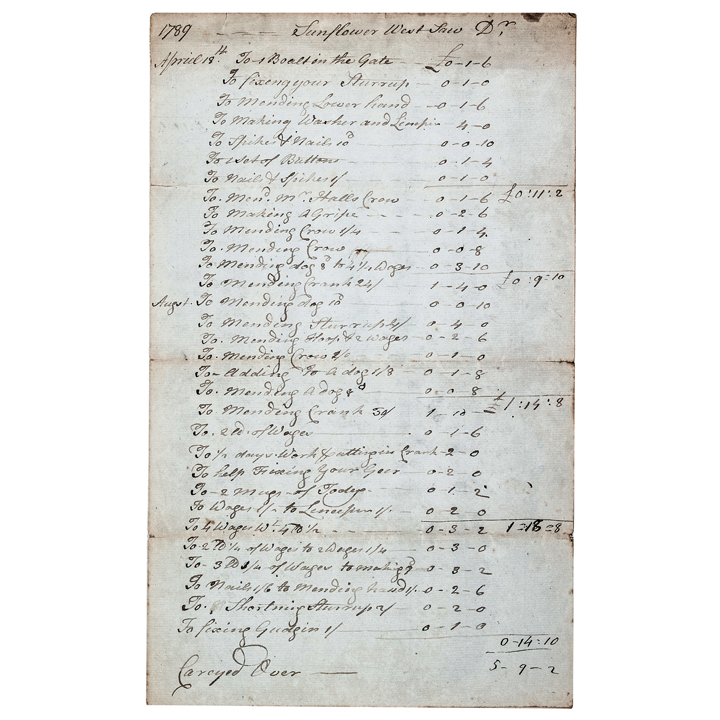
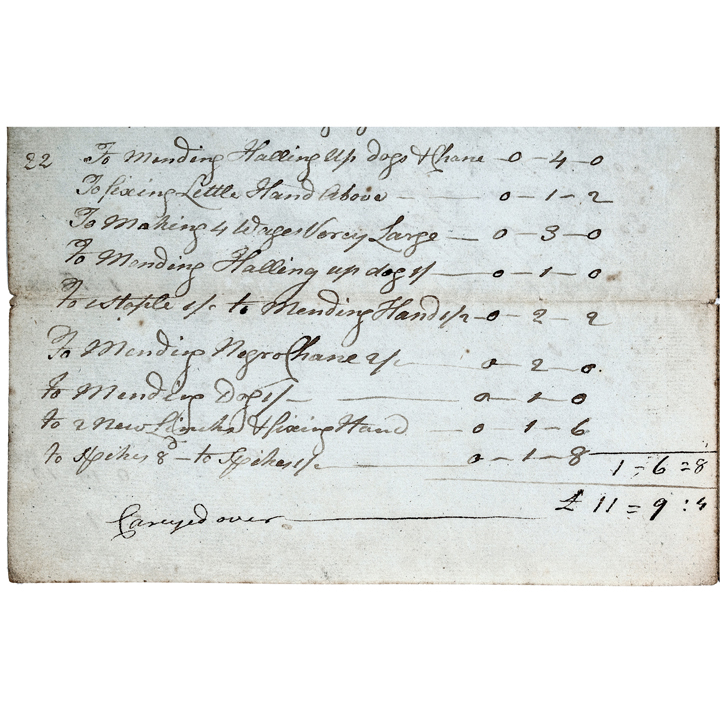
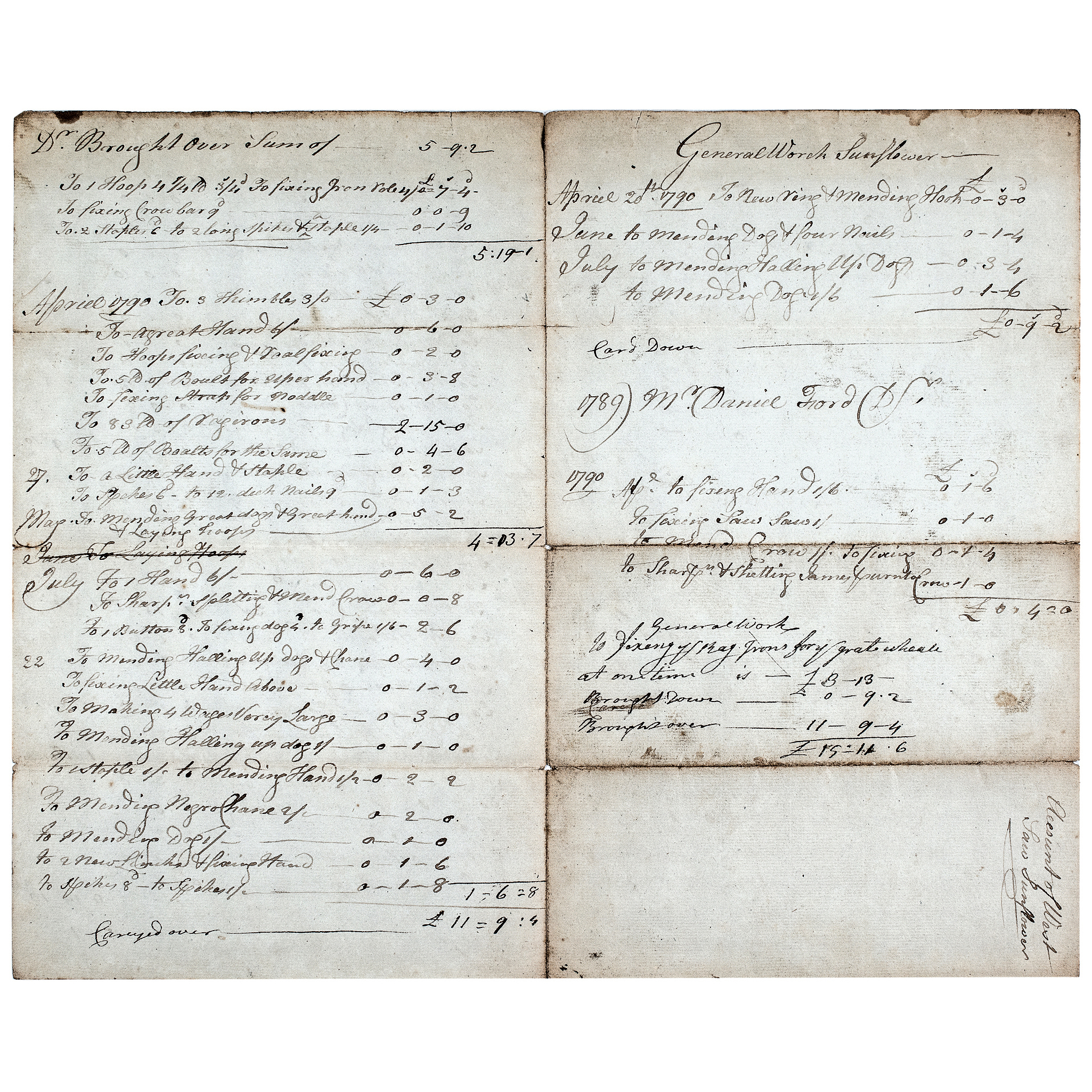
1789 to 1790 Blacksmith's Handwritten Account Ledger with a Charge for "Mending Negro Chain" Entry Listed
|
|||||||||||
|
|||||||||||
 |
|
||||||||||
|
Lot 186:
1789 to 1790 Blacksmith's Handwritten Account Ledger with a Charge for "Mending Negro Chain" Entry Listed
1789 to 1790 Dated, Black History related Entry for "Mending Negro Chain” Listed in this 4 page Manuscript Blacksmith's Account Ledger, Itemized Charges for Agricultural, Mill, and Wagon Ironwork, Fine. This Manuscript blacksmith's account ledger section has 4 pages being 2 two-sided pages folded to 12 x 8.5 Inches per page written in clearly readable brown ink on light blie wove paper. It records many itemized charges in standard double-entry form for ironwork that was performed for several customers between 1789 and 1790. Some headed, "Sunflower West Saw," "General Work Sunflower," and a separate account for a "Mr. Daniel Ford." The bulk of the entries document the routine trade of a rural blacksmith's shop: mending crowbars, hoops, stirrups, wedges, cranks, gudgeons, linchpins, spikes, and wagon and mill ironwork, including a charge for "fixing of Wag[g]on Irons for ye great wheel," indicative of a water-powered mill operation being among this ledger's noted customers. Among the July entries is the charge, "To Mending Negro Chain - 0-2-0." This single line stands as a direct, primary-source record of the material apparatus of Slavery, entered into the ledger with the same routine, unremarked hand as the surrounding charges for mending crowbars and dog-irons. Blacksmiths' account books of this period and region document such work as an unexceptional part of ordinary trade; a closely comparable Virginia example, the 1789-1799 ledger of Williamsburg and Richmond blacksmith James Anderson, likewise records charges for "Mending legg Irons" and handcuffs for a jail, confirming that this kind of entry reflects a broader, documented pattern rather than an isolated occurrence. For researchers of the economic and material history of American Slavery, entries of this kind, embedded within otherwise unremarkable commercial record-keeping, offer a rare and unfiltered form of evidence, seldom preserved so plainly elsewhere in the historical record. Very rare. |
|||||||||||
|
Auction Closing: Saturday, November 14th
at Noon Eastern Time • 9:00 AM Pacific Time |
|||||||||||