
|
Lot: 193 ♡
|
|||||||||||
|
"LIBERTY GIVEN TO THE SLAVES" CHILD'S CUP
|
|||||||||||
|
|||||||||||
 |
|
||||||||||
|
Lot 193:
"LIBERTY GIVEN TO THE SLAVES" CHILD'S CUP
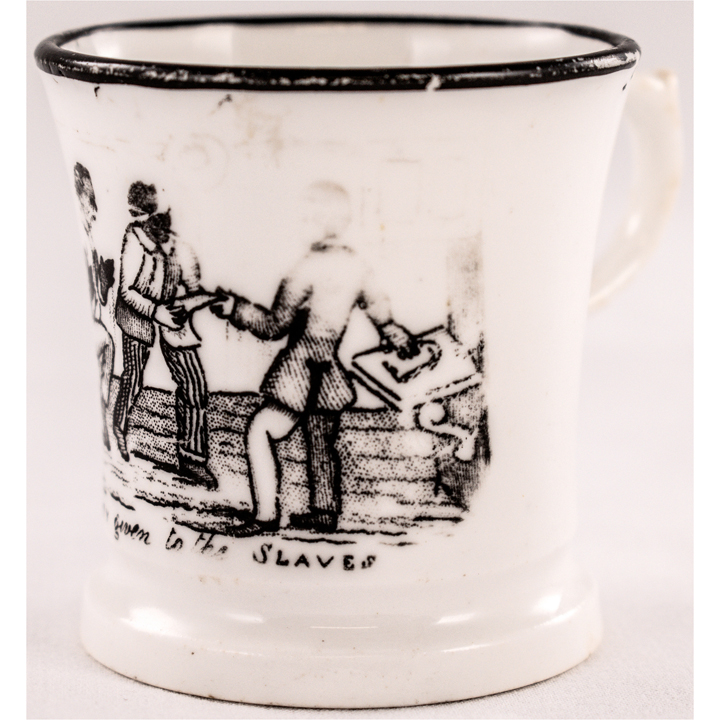
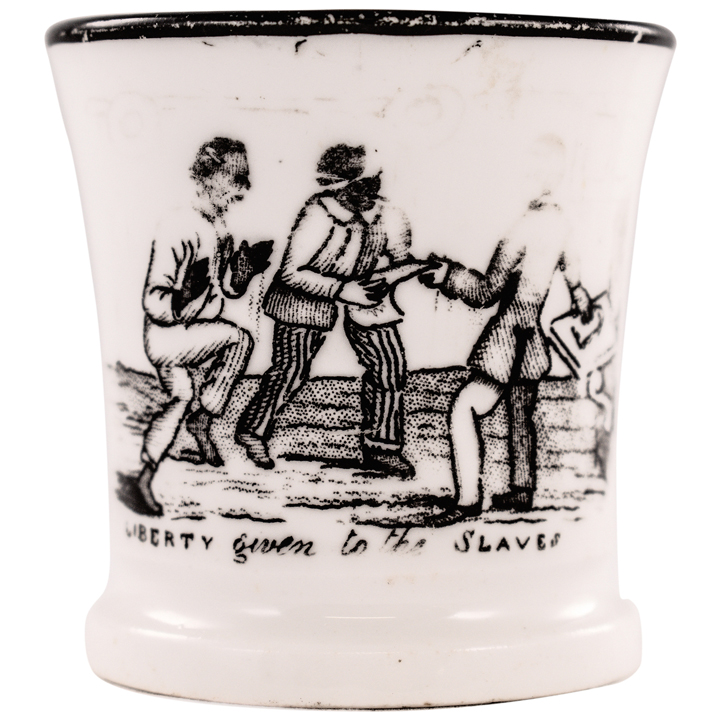
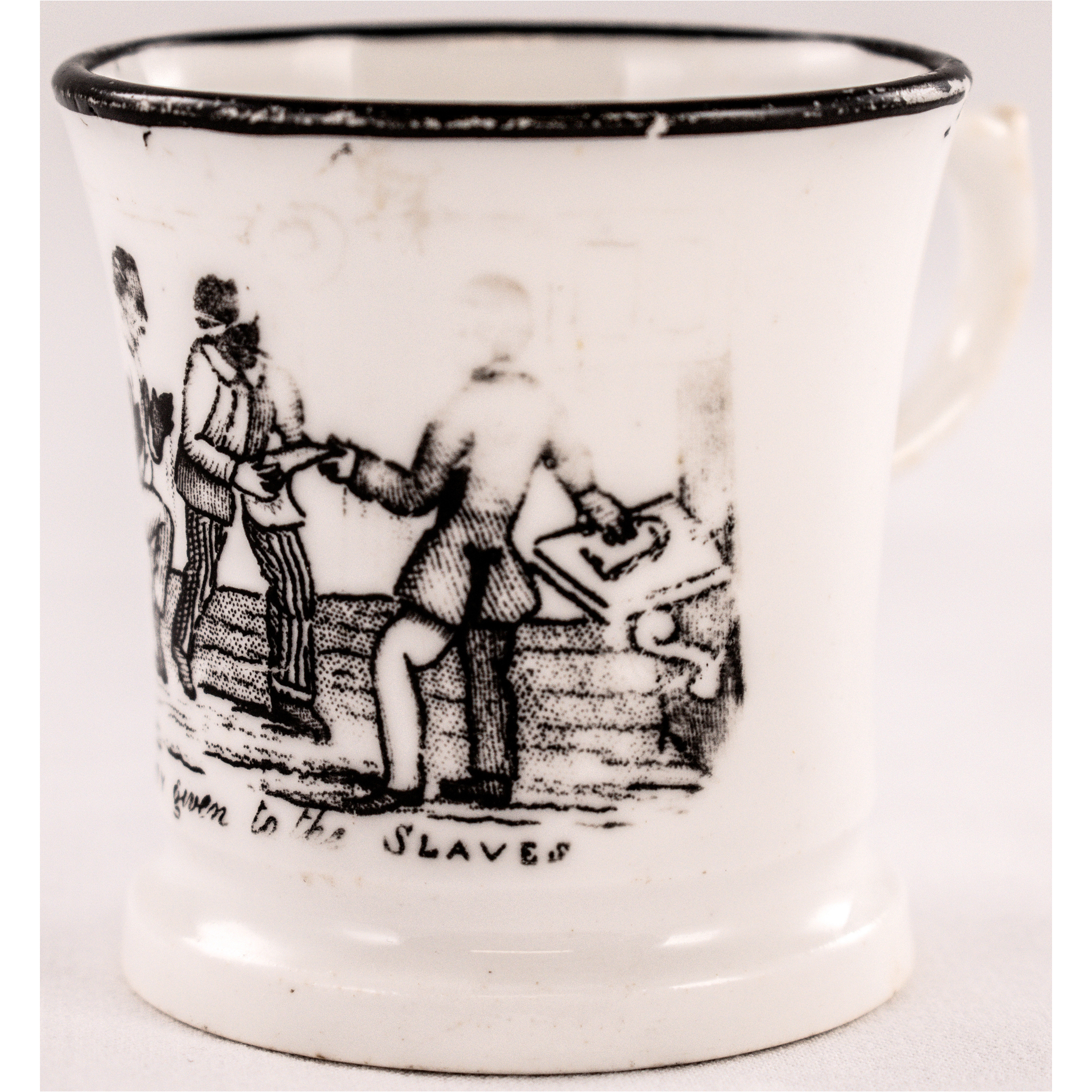
c. September 1862-Civil War Era with Legend, "LIBERTY GIVEN TO THE SLAVES" Child’s Cup with Black Transfer on white ceramic, 2.375" tall, handle fully intact, Fine. A rare black transfer vignette scene with some wear and minor loss at upper right and left from actual handling. The three main figures depict a jubilant scene of Emancipation apparently being read held in the central figures hands. The text Legend, "LIBERTY Given To The SLAVES" below the illustration. Very Rare. On September 22, 1862, President Abraham Lincoln issued the preliminary Emancipation Proclamation, which declared that as of January 1, 1863, all enslaved people in the states currently engaged in rebellion against the Union “shall be then, thenceforward, and forever free.” Lincoln didn’t actually free all of the approximately 4 million men, women and children held in slavery in the United States when he signed the formal Emancipation Proclamation the following January 1st, 1863. The document applied only to Enslaved people in the Confederacy, and not to those in the border states that remained loyal to the Union. But although it was presented chiefly as a military measure, the Proclamation marked a crucial shift in Lincoln’s views on Slavery. Emancipation would redefine the Civil War, turning it from a struggle to preserve the Union to one focused on ending Slavery, and set a decisive course for how the nation would be reshaped after that historic conflict. The Emancipation Proclamation has been a much-debated and much-misunderstood document. Many people believe it freed all the Slaves, but it freed only those who lived in areas that were still in rebellion against the federal government as of the date of the Proclamation, January 1, 1863. Although Abraham Lincoln had strong personal feelings against Slavery, he initially had no plans to abolish it. But by the summer of 1862, he determined to free the Slaves in the Rebel states because this would make it harder for the Confederacy to continue the war. He believed that his authority as Commander-in-Chief of the armed forces gave him the ability to do this; however, this military authority could not be applied to the Slave states that had remained loyal to the Union. Therefore, the Proclamation applied only to the states that were in rebellion against the federal government as of January 1, 1863. |
|||||||||||
|
Auction Closing: Saturday, November 14th
at Noon Eastern Time • 9:00 AM Pacific Time |
|||||||||||