
|
Lot: 20 ♡
|
|||||||||||
|
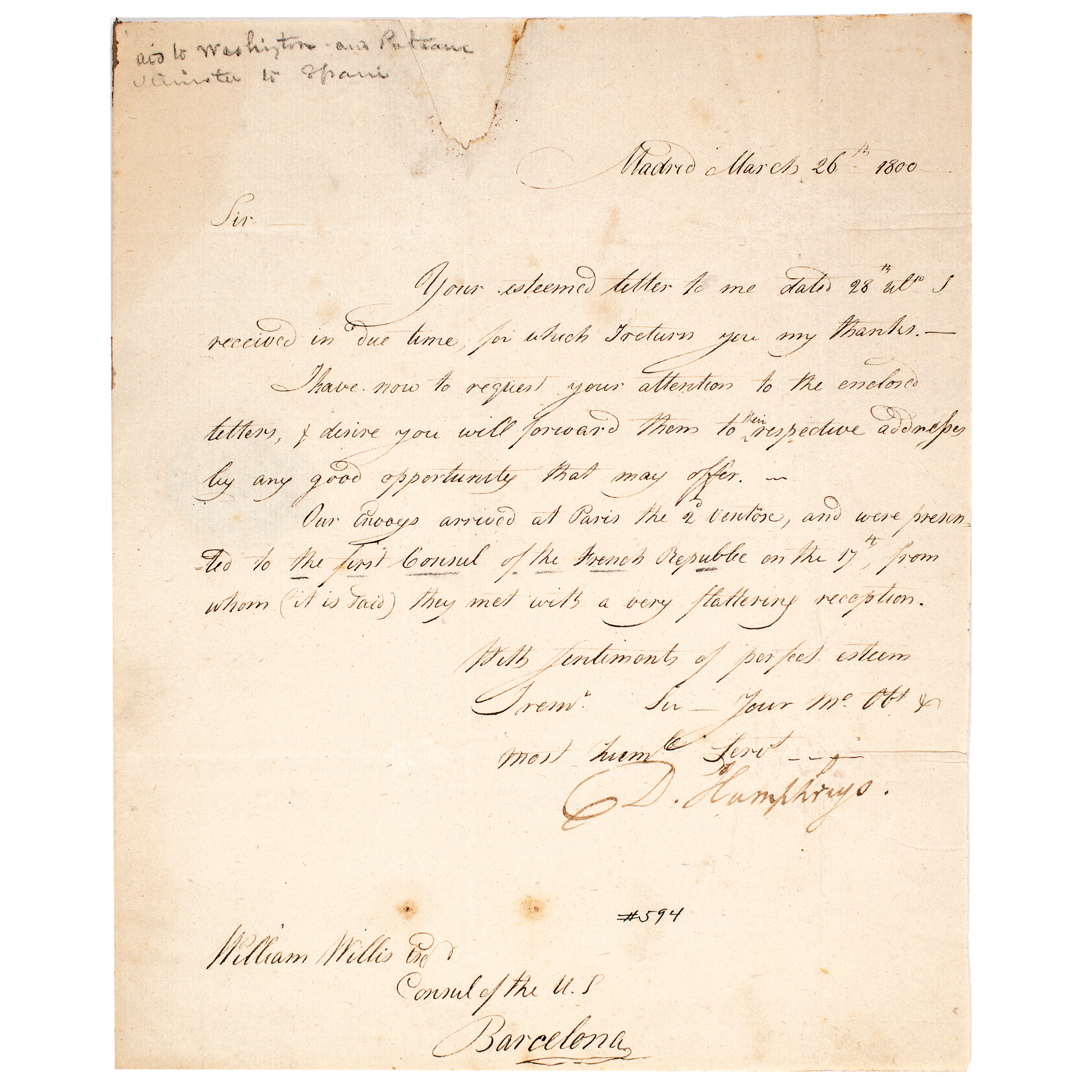
David Humphreys Important Content Signed Diplomatic Letter from Madrid March 8, 1800 sent to William Willis, Esq., Consul of the United States, Barcelona (Spain)
|
|||||||||||
|
|||||||||||
 |
|
||||||||||
|
Lot 20:
David Humphreys Important Content Signed Diplomatic Letter from Madrid March 8, 1800 sent to William Willis, Esq., Consul of the United States, Barcelona (Spain)
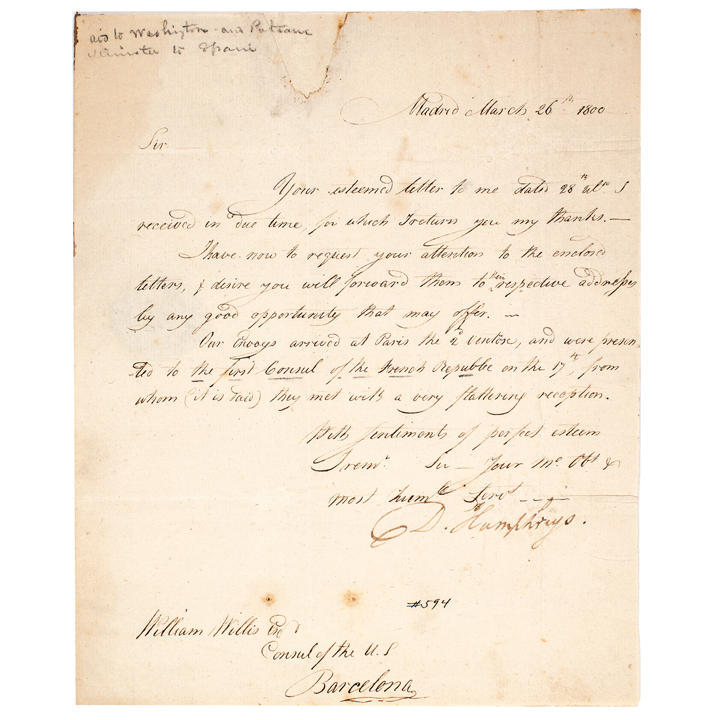
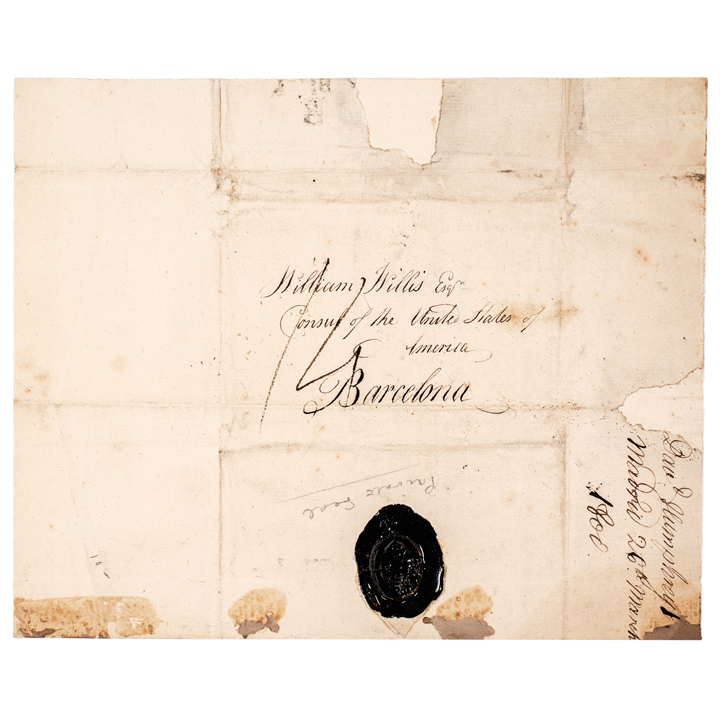
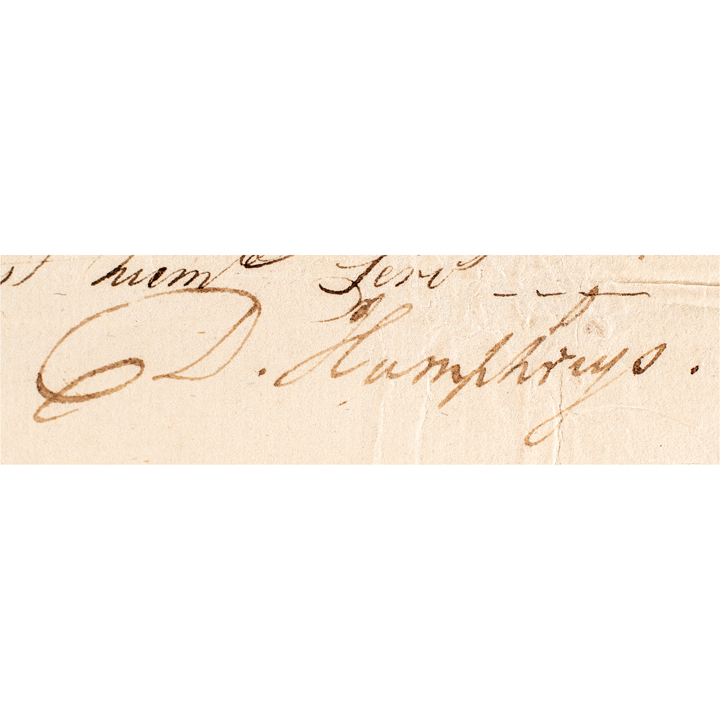
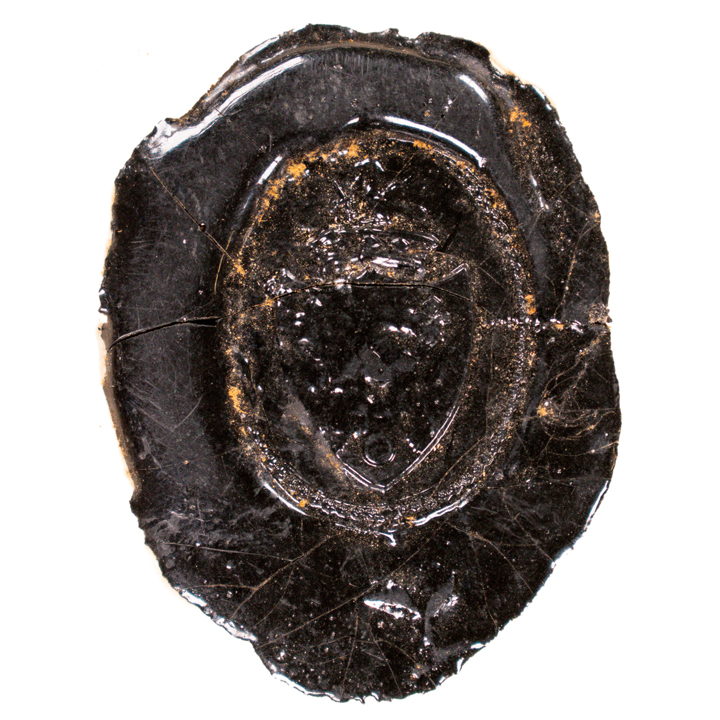
DAVID HUMPHREYS (1752-1818). Poet, soldier, diplomat, and intimate of George Washington; Aide-de-Camp to General George Washington during the Revolutionary War, Member of the Hartford Wits, and U.S. Minister to Portugal, and subsequently U.S. Minister to Spain 1796-1801. March 26, 1800-Dated Federal Period, Autograph Letter Signed, "D. Humphreys" sent to William Willis, Esq., Consul of the United States, Barcelona (Spain), 1 page, measuring about 9 x 7.5 inches, Very Fine. This letter is well written in brown ink on clean laid period paper, with repair to the wax seal was torn open and with four traces of prior mounting to the bottom reverse edge, folded for transmittal. In this rare United States diplomatic letter, written from Madrid during the final year of David Humphreys ministerial appointment, Humphreys acknowledges William Willis's prior letter of the 28th, and requests him to forward enclosed letters to their respective addresses "by any good opportunity that may offer." Humphreys then conveys a significant piece of diplomatic intelligence: "Our Envoys arrived at Paris the 2 Ventose, and were presented to the First Consul of the French Republic on the 17th, from whom (it is said) they met with a very flattering reception." This refers to the special American diplomatic mission to France by Oliver Ellsworth, William Vans Murray, and William Richardson Davie, who were dispatched by President John Adams to negotiate what would become the “Convention of 1800” (Mortefontaine), ending the Quasi-War with France. Their personal presentation to Napoleon Bonaparte, as First Consul, on February 17, 1800 is here reported with characteristic diplomatic precision. The verso transmittal cover is addressed in David Humphreys's hand to, "William Willis Esq. / Consul of the United States / Barcelona," with a wonderful sharply detailed large bold black wax seal bearing his device, and docketed” "Gen. Humphreys / Madrid 26 March / 1800." The signature, "D. Humphreys" at the conclusion is clear and nicely signed measuring a large 2.75 inches long. This letter falls squarely within the Quasi-War with France (1798-1800), when Spain being allied with France, created friction for American shipping in Mediterranean and Spanish colonial ports, and David Humphreys was actively working to shield American commercial interests and citizens through diplomatic protest, with Willis as his on-the-ground source of information from Barcelona's busy port. David Humphreys (1752-1818) was U.S. Minister Plenipotentiary to Spain, based in Madrid, serving in that role from 1797 until 1801/1802. William Willis was the first U.S. Consul at Barcelona, appointed by John Adams on December 29, 1797, tasked with promoting American trade with Catalonia's textile industry. As Minister, Humphreys was Willis's direct diplomatic superior and Willis reported to him, and Humphreys in turn reported to the Secretary of State (first Timothy Pickering, later John Marshall and then James Madison). The earliest surviving letter we can confirm between them is dated April 13, 1799, from Madrid, in which David Humphreys acknowledges receipt of Willis's letters, and confirms that he'd formally transmitted Willis's consular commission to the Spanish Minister of State, essentially finalizing Willis's official recognition by the Spanish government. This places their working relationship squarely in the context of March 1800. Through 1799-1802, their relationship involved Protecting American shipping. Humphreys repeatedly lodged formal protests with the Spanish government (to ministers Cevallos and Urquijo) over Spanish seizures and harassment of American vessels reported to him by Willis, including the Catherine (Captain Mills), detained in Barcelona in September 1800 amid the Quasi-War-era tensions with France and Britain's naval presence in the Mediterranean. Willis relayed intelligence to Humphreys about threats from Tripoli and forwarded correspondence from Consul Richard O'Brien (America's Algiers-based negotiator). In November 1801, Humphreys formally protested to the Spanish government over "insults" directed at Willis in Barcelona, alongside a separate incident involving U.S. Navy Captain Bainbridge. |
|||||||||||
|
Auction Closing: Saturday, November 14th
at Noon Eastern Time • 9:00 AM Pacific Time |
|||||||||||