
|
Lot: 218 ♡
|
|||||||||||
|
PEHRISKA-RUHPA Handcolored Aquatint After Bodmer
|
|||||||||||

|
|||||||||||
 |
|
||||||||||
|
Lot 218:
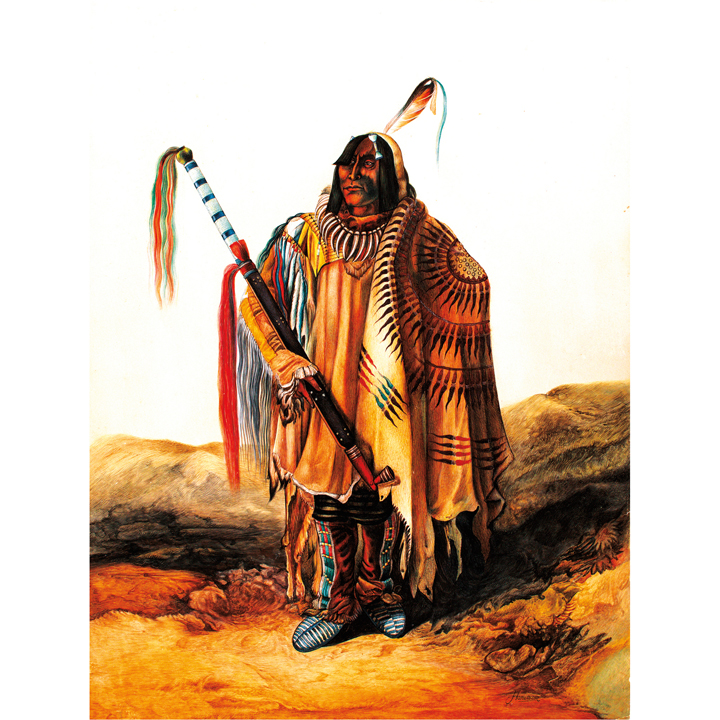
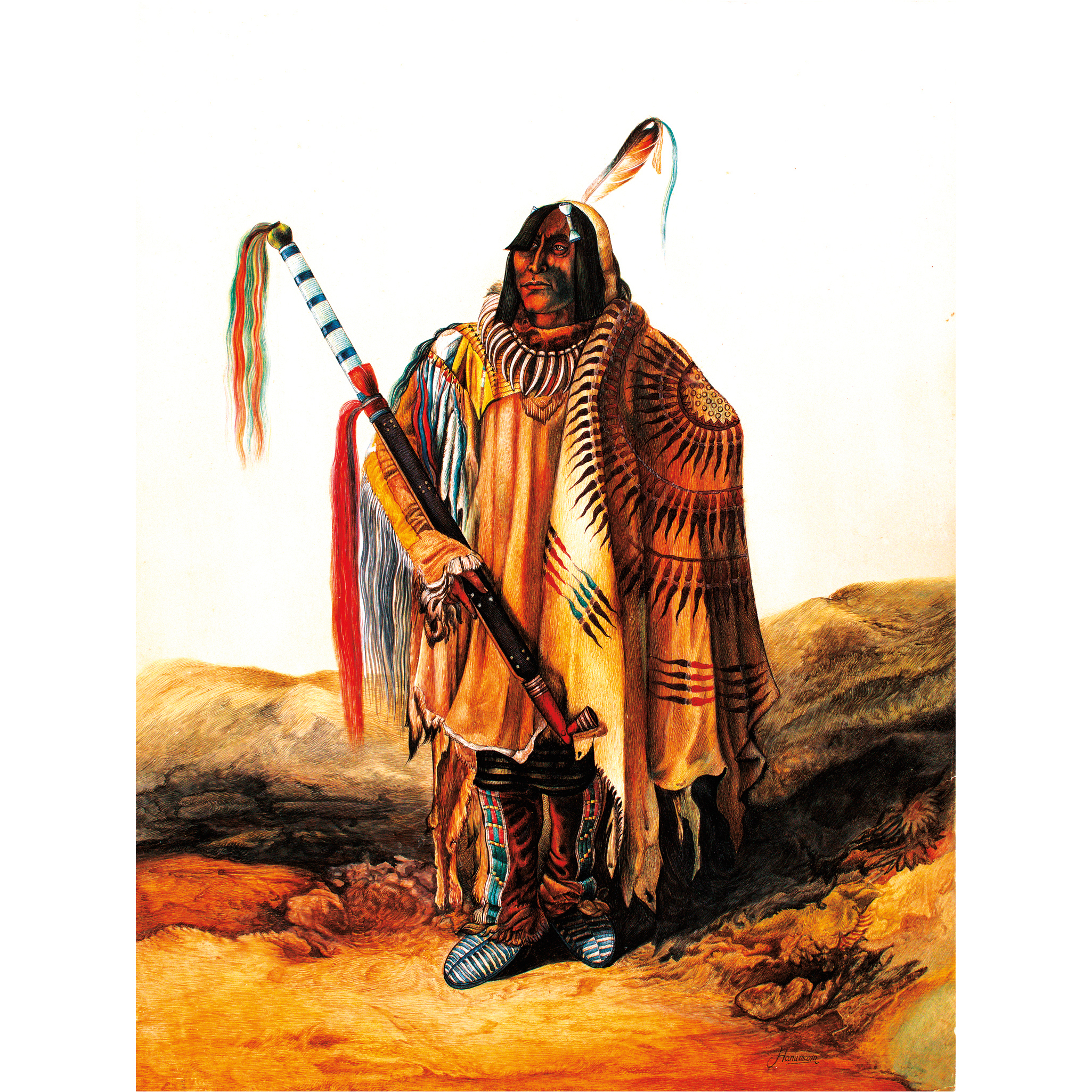
PEHRISKA-RUHPA Handcolored Aquatint After Bodmer
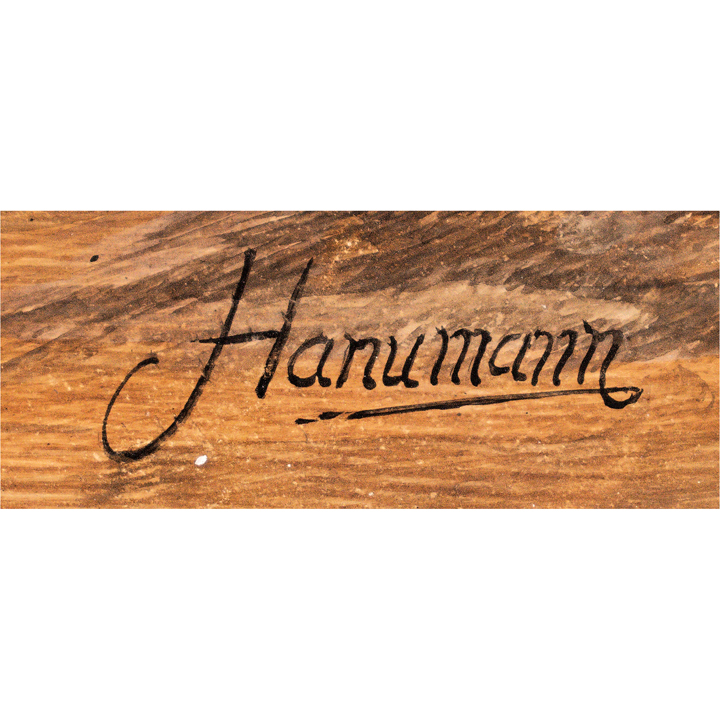
c. 1835, Vivid Hand-Colored Aquatint, PEHRISKA-RUHPA, After Karl Bodmer, Signed at bottom right by Hanumann, Extremely Fine. An outstanding vividly Hand-Colored Aquatint on thin white cardstock measures about 15” x 19.5”, signed “Hanumann” at lower right written in black. Image shows Native American Indian PEHRISKA-RUHPA warrior and Chief of the Hidatsa tribe of Plains Indians standing wearing his native period skins and holding a magnificent colorful partially beaded huge decorated pipe with two locks of colored horse hair. After Karl Bodmer’s “Pehriska-Ruhpa.” Research shows it is from “Travels In the Interior of North America in the Years 1832 to 1834. London: Ackermann and Company. Only the slightest extreme outer edge wear noted from prior handling. A most impressive image with great eye appeal perfect for framing and display. Swiss-born Bodmer was engaged by Prince Maximilian zu Wied-Neuwied (1782-1867) specifically to provide a record of his travels in North America, principally among the Plains Indians. In the company of David Dreidoppel (Prince Maximilian's servant and hunting companion), their travels in North America were to last from 1832 to 1834. Well armed with information and advice, the party finally left St. Louis, on the most important stage of their travels, aboard the steamer Yellow Stone on April 10, 1833. They proceeded up the treacherous Missouri River along the line of forts established by the American Fur Company. At Bellevue they encountered their first Indians, then went on to make contact with the Sioux tribe, learning of and recording their little-known ceremonial dances and powerful pride and dignity. Transferring from the Yellow Stone to another steamer, the Assiniboin, they continued to Fort Clark, where they visited the Mandan, Mintari, and Crow tribes, then the Assiniboins at Fort Union, the main base of the American Fur Company. On a necessarily much smaller vessel they journeyed through the extraordinary geological scenery of that section of the Missouri to Fort Mackenzie in Montana, establishing a cautious friendship with the fearsome Blackfeet. From this, the westernmost point reached, it was considered too dangerous to continue and the return journey downstream began. The winter brought its own difficulties and discomforts, but Bodmer was still able to execute numerous studies of villages, dances, and especially the people, who were often both intrigued and delighted by his work. The portraits are particularly notable for their capturing of individual personalities, as well as forming a primary account of what were to become virtually lost cultures. |
|||||||||||
|
Auction Closing: Saturday, November 14th
at Noon Eastern Time • 9:00 AM Pacific Time |
|||||||||||